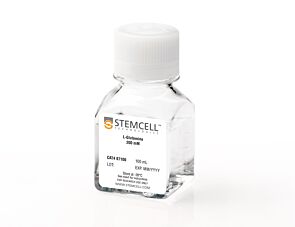
DMEM/F-12 with 15 mM HEPES

Dulbecco's Modified Eagle's Medium/Nutrient Ham's Mixture F-12 (DMEM/F-12) with 15 mM HEPES buffer

DMEM/F-12 with 15 mM HEPES

Dulbecco's Modified Eagle's Medium/Nutrient Ham's Mixture F-12 (DMEM/F-12) with 15 mM HEPES buffer

From: 66 USD
Catalog #
(Select a product)
Dulbecco's Modified Eagle's Medium/Nutrient Ham's Mixture F-12 (DMEM/F-12) with 15 mM HEPES buffer
Add to Wish List

Overview

Dulbecco's Modified Eagle's Medium/Nutrient Ham's Mixture F-12 (DMEM/F-12) with 15 mM HEPES is recommended for a wide variety of cell culture applications. Selection of suitable nutrient medium is dependent on cell type, culture conditions, and degree of chemical definition required for the cell culture application.
Subtype
Basal Media
Cell Type
Other
Species
Human, Mouse, Non-Human Primate, Other, Rat
Application
Cell Culture

Protocols and Documentation

Find supporting information and directions for use in the Product Information Sheet or explore additional protocols below.

Document Type
Product Name
Catalog #
Lot #
Language
Catalog #
36254
Lot #
All
Language
English
Document Type
Safety Data Sheet
Catalog #
36254
Lot #
All
Language
English

Resources and Publications

Publications (18)

Tau-induced mitochondrial reverse electron transport drives neurodegeneration. W. Li et al. Neuron 2026 Aug

Abstract

Hyperphosphorylation and aggregation of tau are pathological hallmarks of tauopathies. Mitochondrial dysfunction is also a common feature of tauopathies. The mechanistic link between tau abnormalities and mitochondrial dysfunction and its relationship to the physiological function of tau, however, is unclear. Here, we demonstrate that tau regulates mitochondrial reverse electron transport (RET), which produces excess reactive oxygen species (ROS), reduces the NAD+/NADH ratio, and is activated by aging or stress. In flies, mice, and human induced pluripotent stem cell (hiPSC)-derived neurons, tau depletion eliminates stress-induced RET and confers resilience. Mechanistically, tau enters mitochondria and directly interacts with the complex I subunit NDUFS3 to promote RET in a phosphorylation-dependent manner. Elevated RET further drives tau hyperphosphorylation, establishing a self-perpetuating pathological loop. Inhibition of RET ameliorates tau toxicity across species. RET regulation thus represents a previously unrecognized normal function of tau that becomes pathological in disease, providing a therapeutic target for various conditions characterized by tau abnormalities and mitochondrial dysfunction.
Analyzing efficiency of a lentiviral shRNA knockdown system in human enteroids using western blot and flow cytometry A. Wilson et al. STAR Protocols 2024 May

Abstract

SummaryEnteroids are in vitro models to study gastrointestinal pathologies and test personalized therapeutics; however, the inherent complexity of enteroids often renders standard gene editing approaches ineffective. Here, we introduce a refined lentiviral transfection protocol, ensuring sufficient lentiviral engagement with enteroids while considering spatiotemporal growth variability throughout the extracellular matrix. Additionally, we highlight a selection process for transduced cells, introduce a protocol to accurately measure transduction efficiency, and explore methodologies to gauge effects of gene knockdown on biological processes. Graphical abstract Highlights•Protocol for lentivirus-based gene editing of gastrointestinal enteroids•Steps for performing a puromycin selection trial•Instructions for assessing transduction efficiency Publisher’s note: Undertaking any experimental protocol requires adherence to local institutional guidelines for laboratory safety and ethics. Enteroids are in vitro models to study gastrointestinal pathologies and test personalized therapeutics; however, the inherent complexity of enteroids often renders standard gene editing approaches ineffective. Here, we introduce a refined lentiviral transfection protocol, ensuring sufficient lentiviral engagement with enteroids while considering spatiotemporal growth variability throughout the extracellular matrix. Additionally, we highlight a selection process for transduced cells, introduce a protocol to accurately measure transduction efficiency, and explore methodologies to gauge effects of gene knockdown on biological processes.
Efficient generation of endothelial cells from human pluripotent stem cells and characterization of their functional properties Song W et al. Journal of Biomedical Materials Research - Part A 2016 OCT

Abstract

Although endothelial cells (ECs) have been derived from human pluripotent stem cells (hPSCs), large-scale generation of hPSC-ECs remains challenging and their functions are not well characterized. Here we report a simple and efficient three-stage method that allows generation of approximately 98 and 9500 ECs on day 16 and day 34, respectively, from each human embryonic stem cell (hESC) input. The functional properties of hESC-ECs derived in the presence and absence of a TGF$$-inhibitory molecule SB431542 were characterized and compared with those of human umbilical vein endothelial cells (HUVECs). Confluent monolayers formed by SB431542(+) hESC-ECs, SB431542(-) hESC-ECs, and HUVECs showed similar permeability to 10,000 Da dextran, but these cells exhibited striking differences in forming tube-like structures in 3D fibrin gels. The SB431542(+) hESC-ECs were most potent in forming tube-like structures regardless of whether VEGF and bFGF were present in the medium; less potent SB431542(-) hESC-ECs and HUVECs responded differently to VEGF and bFGF, which significantly enhanced the ability of HUVECs to form tube-like structures but had little impact on SB431542(-) hESC-ECs. This study offers an efficient approach to large-scale hPSC-EC production and suggests that the phenotypes and functions of hPSC-ECs derived under different conditions need to be thoroughly examined before their use in technology development. This article is protected by copyright. All rights reserved.