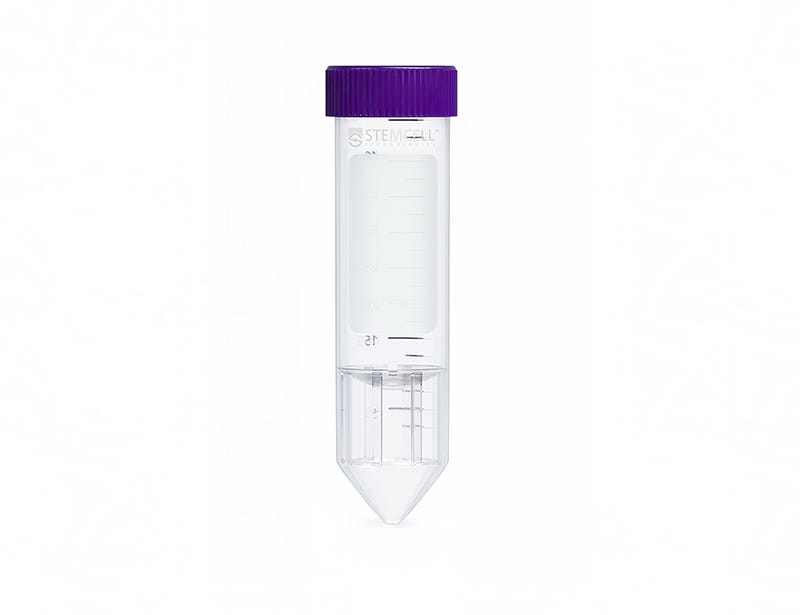
SepMate™-50 (IVD)

Tube for density gradient centrifugation for in vitro diagnostic (IVD) applications
Try SepMate™-50 (IVD) tubes for density gradient centrifugation in your IVD applications. Request a Sample

SepMate™-50 (IVD)

Tube for density gradient centrifugation for in vitro diagnostic (IVD) applications

From: 670 USD
Catalog #
(Select a product)
Tube for density gradient centrifugation for in vitro diagnostic (IVD) applications
Add to Wish List

Product Advantages


  • Eliminates the need for carefully layering blood over the density gradient medium (e.g. Lymphoprep™, etc.)

  • Reduces total centrifuge time to 10 minutes with the brake on for fresh samples

  • Allows fast and easy harvesting of the isolated mononuclear cells by simply pouring off the supernatant

  • Can be combined with RosetteSep™ enrichment cocktails to isolate specific cell types in just 30 minutes

What's Included

  • SepMate™-50 (IVD), 100 Tubes (Catalog #85450)
    • Dispenser box containing 4 bags, 25 Tubes/Bag
  • SepMate™-50 (IVD), 500 Tubes (Catalog #85460)
    • Dispenser box containing 4 bags, 25 Tubes/Bag (Catalog #85450) x 5

What Our Scientist Says

Traditional isolation of PBMCs requires careful layering of blood onto density gradient media prior to centrifugation. We developed SepMate™ to simplify this process, so anyone can isolate PBMCs with a simple pour while maintaining consistency across samples.

Peter MorinTechnical Scientist
Peter Morin, Technical Scientist

Overview

Simplify peripheral blood mononuclear cell (PBMC) isolation by incorporating SepMate™ into your density gradient centrifugation step.

SepMate™ tubes contain an insert that creates a barrier between the density gradient medium and blood, thus eliminating the need for careful blood layering and allowing mononuclear cells to be easily harvested with a simple pour. This product can be used with RosetteSep™ to isolate specific immune cell subsets.

SepMate™-50 is designed for processing 4 to 17 mL of sample.

SepMate™ is manufactured under cGMP and is available as an in vitro diagnostic (IVD) device in Australia, Canada, the European Union (EU), South Korea, Switzerland, Turkey, the United Kingdom (UK), and the United States. In China, SepMate™ is considered general laboratory equipment by the National Medical Products Administration (NMPA). The end user is responsible for determining whether the product is suitable for their specific application.

Browse our Frequently Asked Questions (FAQs) on SepMate™.
Contains
Polypropylene tube containing an insert
Subtype
Centrifugation Tubes
Cell Type
B Cells, Dendritic Cells, Monocytes, Mononuclear Cells, NK Cells, T Cells, T Cells, CD4+, T Cells, CD8+, T Cells, Other Subsets, T Cells, Regulatory
Species
Human
Sample Source
Bone Marrow, Whole Blood
Selection Method
Negative
Application
Cell Isolation, In Vitro Diagnostic
Brand
SepMate
Area of Interest
Chimerism, HLA, Immunology

Data Figures

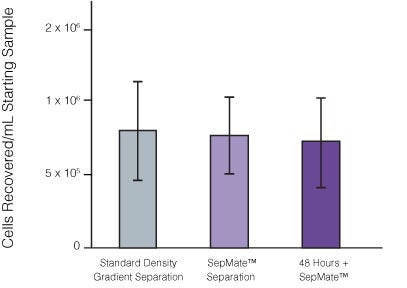
PBMC recovery from fresh whole blood using SepMate™-50 versus standard density gradient centrifugation. Graph also shows PBMC recovery from a 48 hour-old sample using SepMate™. n in each group = 7

Figure 1. Recovery of mononuclear cells (MNCs) from peripheral blood using SepMate™-50 versus standard density gradient centrifiguation. Recovery of MNCs from fresh and 48-hour post blood draw enriched by density gradient centrifugation with SepMate™ (purple) or without (grey). There was no significant difference in the recovery of MNCS with and without SepMate™.

PBMC recovery from fresh whole blood using SepMate™-50 versus standard density gradient centrifugation. Graph also shows PBMC recovery from a 48 hour-old sample using SepMate™. n in each group = 7

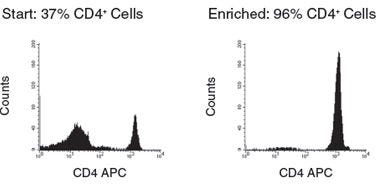
Figure 2. Human CD4+ T Cell Isolation using SepMate™-50 and RosetteSep™ Human CD4+ T Cell Enrichment Cocktail

Protocols and Documentation

Find supporting information and directions for use in the Product Information Sheet or explore additional protocols below.

Document Type
Product Name
Catalog #
Lot #
Language
Catalog #
85460, 85450
Lot #
All
Language
MULTI

Applications

This product is designed for use in the following research area(s) as part of the highlighted workflow stage(s). Explore these workflows to learn more about the other products we offer to support each research area.

Resources and Publications

Publications (93)

Phenotypically similar but functionally distinct NK cell populations within the human maternal-fetal interface M. Frutoso et al. ImmunoHorizons 2026 Mar

Abstract

AbstractNatural killer (NK) cell function within tissues extends beyond exerting cytotoxicity, encompassing a range of functions that are just starting to become fully elucidated. In the context of human placentation, NK cells play a key role in enabling initial placentation, which is associated with the acquisition of tolerance-like properties. If and to which extent NK cells maintain these tolerance-like properties over the course of human pregnancy is still poorly understood. We asked if NK cells isolated from the decidual-placental interface of full-term human pregnancies are able to exert effector function. We observed a significant and striking lack in the ability of NK cells isolated from the decidual-placental interface (DPI) to produce interferon-g (IFN-γ) in response to the activating cytokines interleukin (IL)-12, IL-15, and IL-18. In contrast, NK cells from the decidua retained their responsiveness to cytokine-mediated activation. Notably, CD103+CD69+ tissue-resident NK cells were present in both DPI and decidua, yet exhibited distinct effector function from one another. Using high-parameter flow cytometry and single-cell sequencing, we found that this functional discrepancy was not directly predictable based on their cell surface phenotype or cell transcript. Together, our findings reveal the presence of distinct functional resident NK cell populations in 2 anatomically adjacent tissues at healthy full-term pregnancies.
A Circulating GPNMB-Based Multimodal Model Integrates Tumor-Immune Crosstalk to Predict Immunotherapy Response in Esophageal Cancer. L. Zhu et al. Cancer discovery 2026 Jul

Abstract

UNLABELLED: Neoadjuvant immunotherapy improves outcomes in esophageal squamous cell carcinoma (ESCC), yet ∼70% of patients fail to respond. Pretreatment biopsies and plasma provide critical opportunities for biomarker discovery. In this study, we performed plasma proteomic profiling and identified soluble glycoprotein nonmetastatic melanoma protein B (sGPNMB) as the most elevated circulating protein in nonresponders. Mechanistically, tumor cell-derived sGPNMB suppressed CD8+ T-cell receptor signaling via the SDC4-CD148 axis to induce functional exhaustion, with secretion being required for its immunosuppressive activity. Cancer-associated fibroblast-epithelial (CAF-Epi) niches promoted SOX2 upregulation in tumor cells, transcriptionally activating GPNMB expression. In humanized patient-derived xenograft models, circulating GPNMB levels predicted response to PD-1 blockade, and GPNMB inhibition synergized with therapy. Across retrospective cohorts and a prospective clinical trial, a multimodal model combining plasma GPNMB levels, CAF-Epi niche detection, and clinical-pathologic features achieved robust predictive accuracy for immunotherapy response and survival. These findings establish a spatial-circulating biomarker framework for precision ESCC immunotherapy. SIGNIFICANCE: Tumor-derived soluble GPNMB, transcriptionally activated by SOX2 within CAF-Epi niches, drives CD8+ T-cell exhaustion and resistance to PD-1 blockade in ESCC. Integrating circulating GPNMB levels with CAF-Epi niche features and clinical-pathologic factors, we develop and validate a clinically scalable multimodal model for predicting immunotherapy response.
Intrinsic tumor cell line immunogenicity may drive CAR-independent T cell responses and confound CAR T cell preclinical modeling. M. Sheng et al. Journal for immunotherapy of cancer 2026 Jul

Abstract

BACKGROUND: Chimeric antigen receptor (CAR) T cells are highly potent therapies approved by the U.S. Food and Drug Administration (FDA) for several hematological malignancies. However, efficacy remains variable due to resistance, antigen modulation, systemic toxicities, and relapse. Developing improved CAR T cell therapies relies on preclinical models that accurately predict clinical outcomes. For this purpose, immortalized tumor cell lines, such as the Burkitt's lymphoma line Raji, are commonly used. METHODS: CD19-targeting CAR (CAR19) and non-transduced (NT) human T cells were co-cultured with target cell lines in vitro to assess T cell cytotoxicity, cytokine production, activation, and proliferation. Major histocompatibility complex (MHC) class I and II blocking antibodies and TCR knockout (KO) T cells were used to validate T cell receptor interactions. In vivo, Raji wild-type (wt) or CD19 KO tumor-bearing mice were treated with CAR19 or NT T cells, and survival, tumor burden, serum cytokines, and T cell phenotype in tissues were analyzed. Statistical analyses using either paired/paired ratio/unpaired two-tailed Student's t tests, two-way analysis of variance, and log-rank (Mantel-Cox) tests were performed using GraphPad Prism 9. RESULTS: We report that T cells generated from multiple different donors exhibit not only strong CAR-mediated cytotoxicity against CD19-expressing Raji WT cells but also, unexpectedly, CAR-independent reactivity against Raji CD19 KO cells. This reactivity was observed both in vitro and in vivo, and was associated with pro-inflammatory cytokine secretion and upregulation of T cell activation markers, consistent with endogenous T cell receptor (TCR) engagement. NT T cells displayed similar activation, cytotoxic, and cytokine responses against Raji cells. These effects failed to occur using other B cell leukemia/lymphoma or solid tumor cell lines in vitro. Both CD4+ and CD8+ T cell populations contributed to this alloreactive response, which could be attenuated by blockade of MHC class I or II, highlighting a TCR:MHC-dependent mechanism. CONCLUSIONS: These findings demonstrate that certain tumor lines can elicit strong allogeneic T cell responses independent of CAR specificity, revealing an important limitation of commonly used preclinical models and highlighting the potential for false-positive assessments of CAR T cell efficacy. Furthermore, these results highlight the importance of validating tumor models for alloreactivity prior to use in preclinical testing.
Try SepMate™-50 (IVD) tubes for density gradient centrifugation in your IVD applications. Request a Sample