N2 Supplement-A

For neural and pancreatic differentiation of mouse and human ES and iPS cells

N2 Supplement-A

For neural and pancreatic differentiation of mouse and human ES and iPS cells
From: 117 USD
Catalog #
(Select a product)
For neural and pancreatic differentiation of mouse and human ES and iPS cells
Add to Wish List

Overview

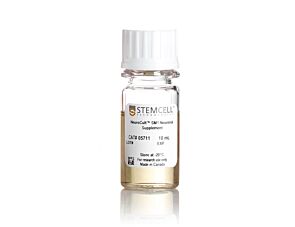
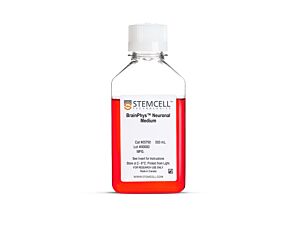
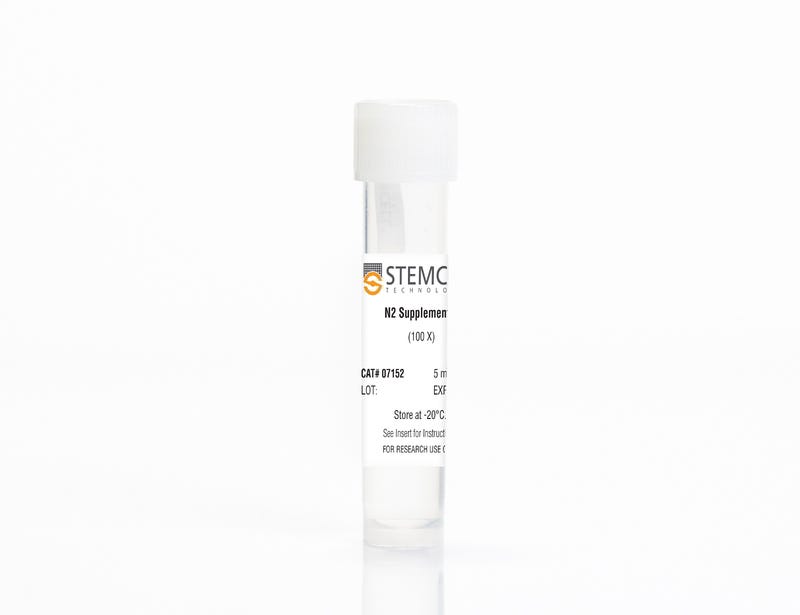
N2 Supplement-A, containing iron-rich human transferrin, was developed for the in vitro differentiation of mouse or human embryonic stem (ES) cells and induced pluripotent stem (iPS) cells to neural and pancreatic-like cell types. Different neuronal subtypes can be generated when human ES/iPS cell-derived neural progenitor cells are cultured in BrainPhys™ Neuronal Medium (Catalog #05790) supplemented with N2 Supplement-A, NeuroCult™ SM1 Neuronal Supplement (Catalog #05711), and other factors. N2 Supplement-A is provided as a 100X stock solution.

N2 Supplement-A is available for individual sale or as a component of the BrainPhys™ Neuronal Medium N2-A & SM1 Kit (Catalog #05793).
Contains
• Recombinant human insulin
• Human holo-transferrin (iron-saturated)
• Sodium selenite
• Putrescine
• Progesterone
• Other ingredients
Subtype
Supplements
Cell Type
Endoderm, PSC-Derived, Neural Cells, PSC-Derived, Neural Stem and Progenitor Cells, Pancreatic Cells, Pluripotent Stem Cells
Species
Human, Mouse
Application
Cell Culture, Differentiation
Area of Interest
Disease Modeling, Neuroscience, Stem Cell Biology

Protocols and Documentation

Find supporting information and directions for use in the Product Information Sheet or explore additional protocols below.

Document Type
Product Name
Catalog #
Lot #
Language
Product Name
N2 Supplement-A
Catalog #
07152
Lot #
All
Language
English
Document Type
Safety Data Sheet
Product Name
N2 Supplement-A
Catalog #
07152
Lot #
All
Language
English

Applications

This product is designed for use in the following research area(s) as part of the highlighted workflow stage(s). Explore these workflows to learn more about the other products we offer to support each research area.

Resources and Publications

Publications (10)

Dysregulation of sphingolipid-metabolizing enzymes in Friedreich's ataxia: In vitro and in vivo insights into therapeutic targeting. Z. Ramchunder et al. iScience 2026 Jul

Abstract

Friedreich's ataxia (FRDA) is an inherited neurodegenerative disorder caused by a GAA repeat expansion within the FXN gene, leading to reduced frataxin levels. This deficiency results in mitochondrial dysregulation, oxidative stress, and progressive cell death. Currently, only one approved treatment exists for FRDA in the United States, Canada, and the European Union, which improves neurological outcomes but has not been fully evaluated for broader disease symptoms. Therefore, identifying new therapeutic targets remains essential. Sphingolipids are increasingly recognized for their roles in neurodegeneration with emerging evidence indicating their dysregulation in FRDA. Here, we investigate whether sphingolipid-metabolizing enzymes are similarly affected and assess the therapeutic potential of targeting them. Our findings demonstrate that these enzymes are dysregulated across multiple FRDA models. Importantly, their modulation in vitro and in vivo significantly reduces mitochondrial dysfunction, enhances frataxin expression, and improves key pathological features of the disease, highlighting sphingolipid metabolism as a promising therapeutic target for FRDA.
Alzheimer’s disease induced neurons bearing PSEN1 mutations exhibit reduced excitability Frontiers in Cellular Neuroscience 2024 Oct

Abstract

Alzheimer’s disease (AD) is a devastating neurodegenerative condition that affects memory and cognition, characterized by neuronal loss and currently lacking a cure. Mutations in PSEN1 (Presenilin 1) are among the most common causes of early-onset familial AD (fAD). While changes in neuronal excitability are believed to be early indicators of AD progression, the link between PSEN1 mutations and neuronal excitability remains to be fully elucidated. This study examined iPSC-derived neurons (iNs) from fAD patients with PSEN1 mutations S290C or A246E, alongside CRISPR-corrected isogenic cell lines, to investigate early changes in excitability. Electrophysiological profiling revealed reduced excitability in both PSEN1 mutant iNs compared to their isogenic controls. Neurons bearing S290C and A246E mutations exhibited divergent passive membrane properties compared to isogenic controls, suggesting distinct effects of PSEN1 mutations on neuronal excitability. Additionally, both PSEN1 backgrounds exhibited higher current density of voltage-gated potassium (Kv) channels relative to their isogenic iNs, while displaying comparable voltage-gated sodium (Nav) channel current density. This suggests that the Nav/Kv imbalance contributes to impaired neuronal firing in fAD iNs. Deciphering these early cellular and molecular changes in AD is crucial for understanding disease pathogenesis.
Agarose hydrogel-mediated electroporation method for retinal tissue cultured at the air-liquid interface M. L. Stone et al. iScience 2024 Nov

Abstract

It is advantageous to culture the ex vivo retina and other tissues at the air-liquid interface to allow for more efficient gas exchange. However, gene delivery to these cultures can be challenging. Electroporation is a fast and robust method of gene delivery, but typically requires submergence in liquid buffer for electrical current flow. We have developed a submergence-free electroporation technique that incorporates an agarose hydrogel disk between the positive electrode and retina. Inner retinal neurons and Müller glia are transfected with increased propensity toward Müller glia transfection after extended time in culture. We also observed an increase in BrdU incorporation in Müller glia following electrical stimulation, and variation in detection of transfected cells from expression vectors with different promoters. This method advances our ability to use ex vivo retinal tissue for genetic studies and should be adaptable for other tissues cultured at an air-liquid interface. Subject areas: Genetic engineering, Methodology in biological sciences, Bioelectrical engineering