NeuroCult™ Chemical Dissociation Kit (Mouse)

Kit for chemical dissociation of mouse neurospheres

NeuroCult™ Chemical Dissociation Kit (Mouse)

Kit for chemical dissociation of mouse neurospheres
From: 209 USD
Catalog #
(Select a product)
Kit for chemical dissociation of mouse neurospheres
Add to Wish List

Product Advantages


  • Obtain cleaner cultures with non-mechanical and non-enzymatic cell dissociation

  • Achieve significantly higher cell viability and total cell number after expansion compared to trituration

  • Ensure minimal cell damage and maintained functional properties of cells

What's Included

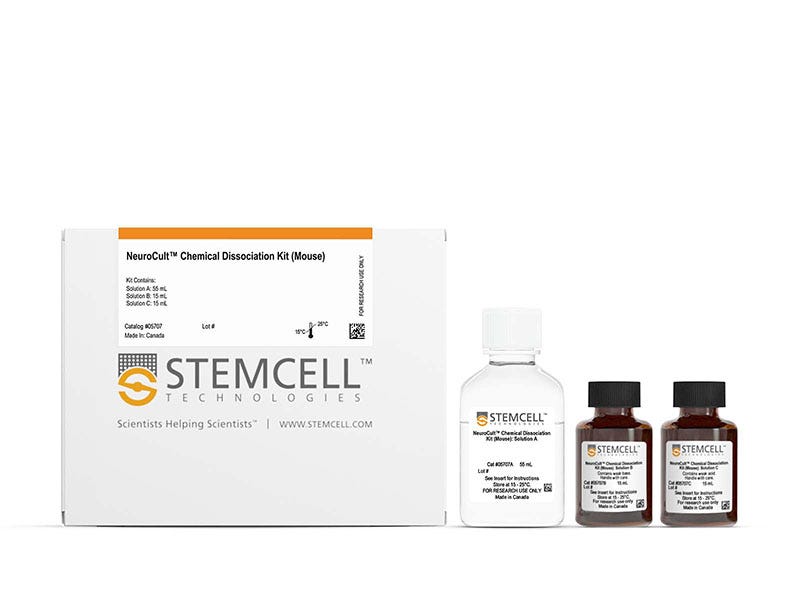
  • NeuroCult™ Chemical Dissociation Solution A, 55 mL
  • NeuroCult™ Chemical Dissociation Solution B, 15 mL
  • NeuroCult™ Chemical Dissociation Solution C, 15 mL

Overview

Dissociate neurospheres derived from embryonic or adult mouse central nervous system tissue with NeuroCult™ Chemical Dissociation Kit. This gentle, non-mechanical and non-enzymatic dissociation kit results in minimal damage to the cells, and ensures higher cell variability and total cell number after expansion in comparison with trituration. Functional properties of cells dissociated with the NeuroCult™ Chemical Dissociation Kit are also maintained upon subsequent subculture.
Subtype
Non-Enzymatic
Cell Type
Neural Stem and Progenitor Cells
Species
Mouse
Application
Cell Culture
Brand
NeuroCult
Area of Interest
Drug Discovery and Toxicity Testing, Neuroscience, Stem Cell Biology

Data Figures

Chemical Dissociation of Mouse Neurospheres

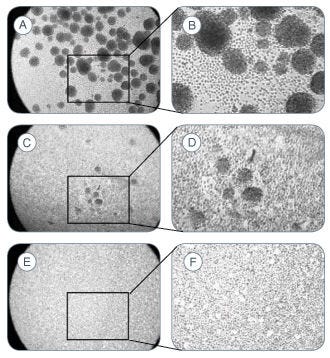
Figure 1. Chemical Dissociation of Mouse Neurospheres

Photomicrographs showing the chemical dissociation of mouse neurospheres at (A) 2 minutes (C) 5 minutes and (E) 7 minutes after the addition of NeuroCult™ Chemical Dissociation Solution B. Figures (B), (D) and (F) are enlargements of the boxed areas in figures (A), (C) and (E), respectively. A single cell suspension is evident in (E) and (F).

Comparison of Percent Viability and Cell Expansion Between the Neurocult™ Chemical Dissociation Kit and Trituration

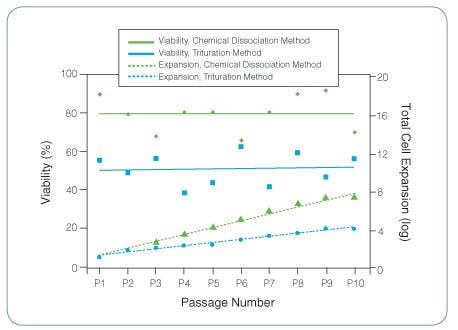
Figure 2. Comparison of Percent Viability and Cell Expansion Between the Neurocult™ Chemical Dissociation Kit and Trituration

Mouse neurospheres were dissociated at each passage (up to P10) with the NeuroCult™ Chemical Dissociation Kit or trituration. Cells dissociated with the NeuroCult™ Chemical Dissociation Kit had a significantly higher percent viability and total cell number (after expansion) in comparison with trituration.

Protocols and Documentation

Find supporting information and directions for use in the Product Information Sheet or explore additional protocols below.

Document Type
Product Name
Catalog #
Lot #
Language
Catalog #
05707
Lot #
All
Language
English
Document Type
Technical Manual
Catalog #
05707
Lot #
All
Language
English
Document Type
Safety Data Sheet 1
Catalog #
05707
Lot #
All
Language
English
Document Type
Safety Data Sheet 2
Catalog #
05707
Lot #
All
Language
English
Document Type
Safety Data Sheet 3
Catalog #
05707
Lot #
All
Language
English

Applications

This product is designed for use in the following research area(s) as part of the highlighted workflow stage(s). Explore these workflows to learn more about the other products we offer to support each research area.

Resources and Publications

Publications (38)

A novel small molecule remyelination therapy for multiple sclerosis. Y. Yang et al. npj drug discovery 2026 Jul

Abstract

We conducted a phenotypic screen of 20,000 central nervous system (CNS)-biased small molecules for their ability to stimulate differentiation of mouse oligodendrocyte progenitor cells (OPCs) into oligodendrocytes. We identified a lead hit (CN045) with an EC50 of 40 nM in the OPC differentiation assay and a chemical scaffold conducive to modifications. In OPC differentiation assays, CN045 demonstrated higher potency than a known OPC differentiation compound Triiodothyronine (T3). CN045 promoted myelin-like ensheathment of engineered nanofibers by mouse and human OPCs and significantly increased remyelination in white and gray matter regions of mouse brain following cuprizone/rapamycin-induced demyelination. In terms of pharmacokinetics, CN045 is CNS-penetrable with low cytotoxicity. CN045 has a short half-life in vivo, but its chemical scaffold is conducive to structural modifications that can improve its metabolic properties. Collectively, these results demonstrate that CN045 is an attractive lead candidate for enhancing OPC differentiation and remyelination in multiple sclerosis patients.
Neuroblastoma plasticity during metastatic progression stems from the dynamics of an early sympathetic transcriptomic trajectory B. Villalard et al. Nature Communications 2024 Nov

Abstract

Despite their indisputable importance in neuroblastoma (NB) pathology, knowledge of the bases of NB plasticity and heterogeneity remains incomplete. They may be rooted in developmental trajectories of their lineage of origin, the sympatho-adrenal neural crest. We find that implanting human NB cells in the neural crest of the avian embryo allows recapitulating the metastatic sequence until bone marrow involvement. Using deep single cell RNA sequencing, we characterize transcriptome states of NB cells and their dynamics over time and space, and compare them to those of fetal sympatho-adrenal tissues and patient tumors and bone marrow samples. Here we report remarkable transcriptomic proximities restricted to an early sympathetic neuroblast branch that co-exist with phenotypical adaptations over disease progression and recapitulate intratumor and interpatient heterogeneity. Combining avian and patient datasets, we identify a list of genes upregulated during bone marrow involvement and associated with growth dependency, validating the relevance of our multimodal approach. The roots of neuroblastoma plasticity and heterogeneity remain poorly understood. Here, the authors characterise the transcriptional states of neuroblastoma cells and their changes throughout development using avian embryo models, single-cell RNA-sequencing, and patient samples; they find transcriptomic changes related to early sympatho-adrenal development.
Alternative splicing coupled to nonsense-mediated decay coordinates downregulation of non-neuronal genes in developing mouse neurons A. Zhuravskaya et al. Genome Biology 2024 Jun

Abstract

The functional coupling between alternative pre-mRNA splicing (AS) and the mRNA quality control mechanism called nonsense-mediated decay (NMD) can modulate transcript abundance. Previous studies have identified several examples of such a regulation in developing neurons. However, the systems-level effects of AS-NMD in this context are poorly understood. We developed an R package, factR2, which offers a comprehensive suite of AS-NMD analysis functions. Using this tool, we conducted a longitudinal analysis of gene expression in pluripotent stem cells undergoing induced neuronal differentiation. Our analysis uncovers hundreds of AS-NMD events with significant potential to regulate gene expression. Notably, this regulation is significantly overrepresented in specific functional groups of developmentally downregulated genes. Particularly strong association with gene downregulation is detected for alternative cassette exons stimulating NMD upon their inclusion into mature mRNA. By combining bioinformatic analyses with CRISPR/Cas9 genome editing and other experimental approaches we show that NMD-stimulating cassette exons regulated by the RNA-binding protein PTBP1 dampen the expression of their genes in developing neurons. We also provided evidence that the inclusion of NMD-stimulating cassette exons into mature mRNAs is temporally coordinated with NMD-independent gene repression mechanisms. Our study provides an accessible workflow for the discovery and prioritization of AS-NMD targets. It further argues that the AS-NMD pathway plays a widespread role in developing neurons by facilitating the downregulation of functionally related non-neuronal genes. The online version contains supplementary material available at 10.1186/s13059-024-03305-8.