Make more informed purchasing decisions with our new product availability and delivery estimate feature, now available on all product pages, in your cart, and during checkout.
Sign In
New to STEMCELL?
Register for an account to quickly and easily purchase products online and for one-click access to all educational content.
New data and packaging, same high quality! Flow cytometry plots are now included on the Certificate of Analysis (CoA) for frozen leukopaks manufactured after May 2022. See Figure 1 in the data section below to view representative plots. Your leukopak may come with external packaging to ensure you get the highest quality product possible upon delivery. Remove all external packaging for optimal thawing performance.
Request the CoA for your frozen leukopaks to see the data, and browse our Frequently Asked Questions (FAQs) on Primary Cells for more information.
Request Pricing
Thank you for your interest in this product.
Please provide us with your contact information and your local representative
will contact you with a customized quote. Where appropriate, they can also assist you with a(n):
Estimated delivery time for your area
Product sample or exclusive offer
In-lab demonstration
By submitting this form, you are providing your consent to STEMCELL Technologies Canada Inc. and its subsidiaries and affiliates (“STEMCELL”) to collect and use your information, and send you newsletters and emails in accordance with our privacy policy. Please contact us with any questions that you may have. You can unsubscribe or change your email preferences at any time.
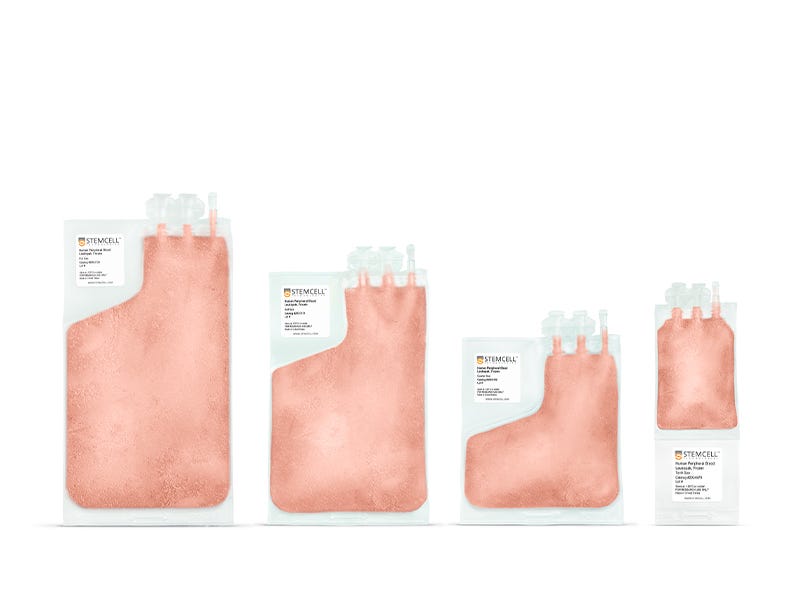
Start experiments when you want to with large numbers of leukocytes, including peripheral blood mononuclear cells (PBMCs). As a cryopreserved product, frozen leukopaks provide samples from specific donors that can be processed when the end-user is ready. We help you get the cells you need with personalized service, custom products, flexible delivery times, and multiple size options.
Each frozen leukopak is a highly concentrated, low-volume apheresis collection from a single, normal donor, using Institutional Review Board (IRB)-approved consent forms and protocols. Each full-sized leukopak is produced from ~2 - 3x blood volumes using the Spectra Optia® Apheresis System, with acid-citrate-dextrose solution A (ACDA) as the anticoagulant. The collected product is then cryopreserved in a controlled-rate freezer. High-resolution HLA typing (Class I and Class II alleles and CMV status) are available upon request. Donor specifications (e.g. BMI category, smoking status, ethnicity, etc.) can be requested in the comment box above, after selecting from the product options. Donors are screened for HIV-1, HIV-2, hepatitis B, and hepatitis C.
Certain products are only available in select territories. Please contact your local sales representative or Product & Scientific Support at techsupport@stemcell.com for further information.
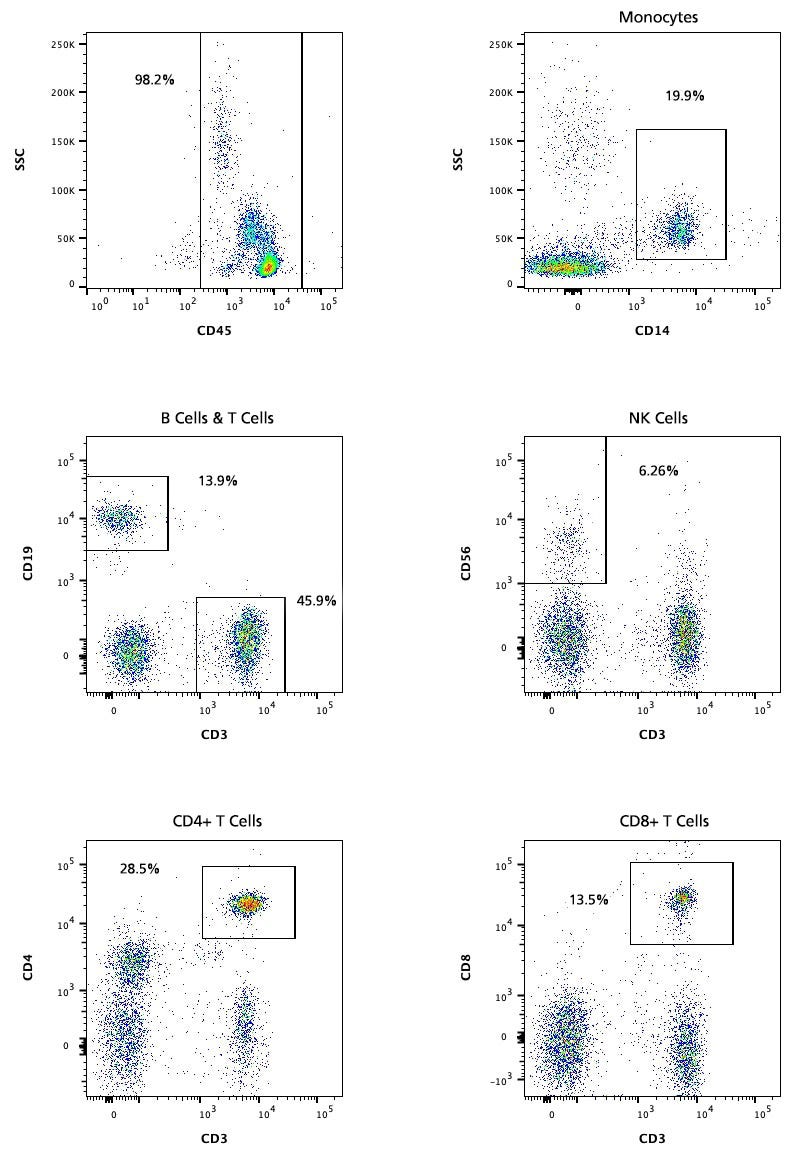
Figure 1. Typical Flow Cytometric Analysis Profile of a Leukopak Before Cryopreservation
Representative gating strategy for flow cytometric immunophenotyping of the different cell subpopulations present in a leukopak product prior to cryopreservation. The CD45 plot was gated on viable single cells while all other plots were gated on viable CD45+ single cells. In the above example, the cell frequencies (as a percentage of the overall leukopak product) are as follows: monocytes (CD14+) 19.9%, B cells (CD19+) 13.9%, NK cells (CD3-CD56+) 6.3%, Helper T cells (CD3+CD4+) 28.5%, and Cytotoxic T cells (CD3+CD8+) 13.5%.
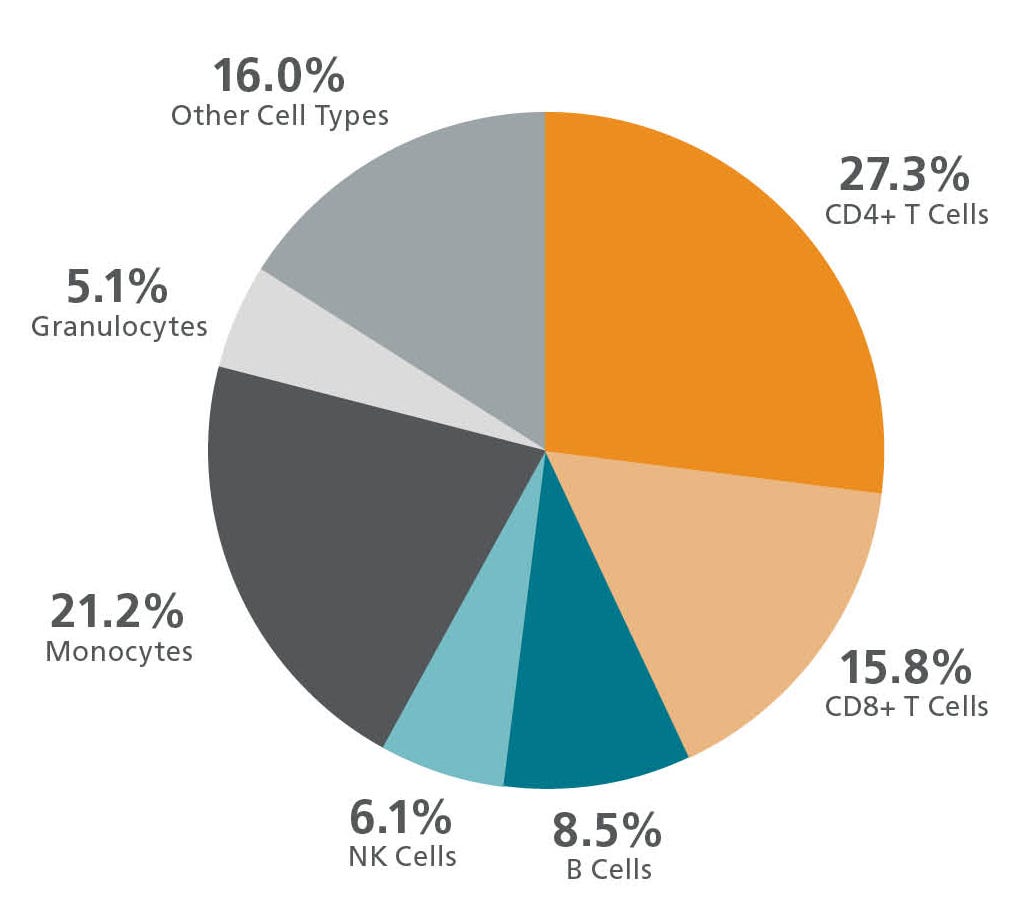
Figure 2. Mean Percentages of Cell Subpopulations in a Leukopak
Representative chart showing the average frequencies of major immune subsets in leukopak products, as measured by flow cytometry prior to cryopreservation. Values shown are mean percentages of total viable leukocytes present in a leukopak (n ≥ 30).
This product is designed for use in the following research area(s) as part
of the highlighted workflow stage(s). Explore these workflows to learn more about the other products we
offer to support each research area.
New data and packaging, same high quality! Flow cytometry plots are now included on the Certificate of Analysis (CoA) for frozen leukopaks manufactured after May 2022. See Figure 1 in the data section below to view representative plots. Your leukopak may come with external packaging to ensure you get the highest quality product possible upon delivery. Remove all external packaging for optimal thawing performance.
Request the CoA for your frozen leukopaks to see the data, and browse our Frequently Asked Questions (FAQs) on Primary Cells for more information.
Quality Statement:
PRODUCTS ARE FOR RESEARCH USE ONLY AND NOT INTENDED FOR HUMAN OR ANIMAL DIAGNOSTIC OR THERAPEUTIC USES UNLESS OTHERWISE STATED.