EasySep™ Human B Cell Enrichment Kit

Immunomagnetic negative isolation of untouched human B cells

EasySep™ Human B Cell Enrichment Kit

Immunomagnetic negative isolation of untouched human B cells
From: 975 USD
Catalog #
(Select a product)
Immunomagnetic negative isolation of untouched human B cells
Add to Wish List

Product Advantages


  • Fast, easy-to-use and column-free

  • Up to 99% purity

  • Untouched, viable cells

What's Included

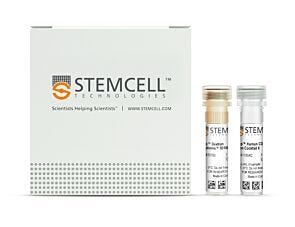
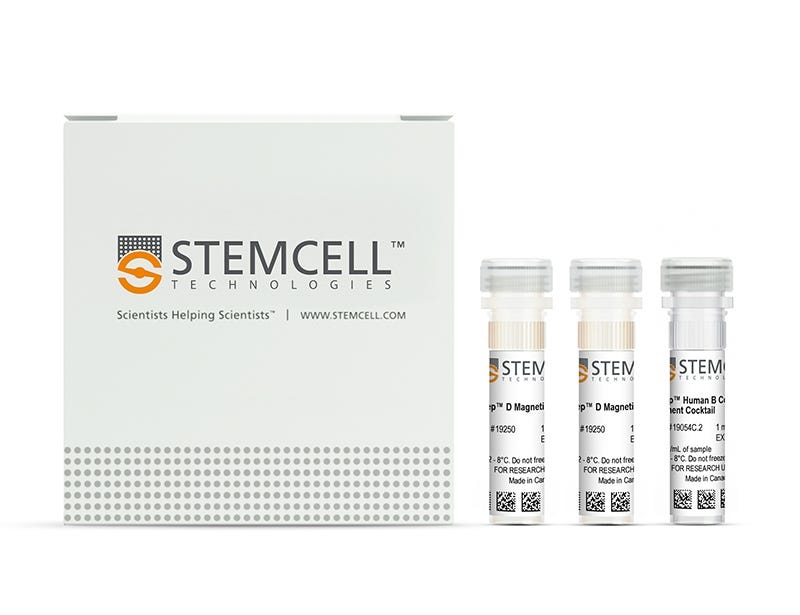
  • EasySep™ Human B Cell Enrichment Kit (Catalog #19054)
    • EasySep™ Human B Cell Enrichment Cocktail, 1 mL
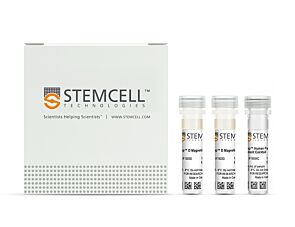
    • EasySep™ D Magnetic Particles, 2 x 1 mL
  • RoboSep™ Human B Cell Enrichment Kit with Filter Tips (Catalog #19054RF)
    • EasySep™ Human B Cell Enrichment Cocktail, 1 mL
    • EasySep™ D Magnetic Particles, 2 x 1 mL
    • RoboSep™ Buffer (Catalog #20104)
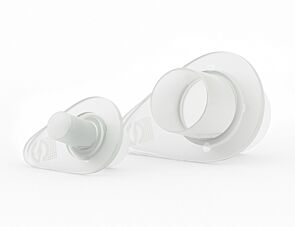
    • RoboSep™ Filter Tips (Catalog #20125)
Products for Your Protocol
To see all required products for your protocol, please consult the Protocols and Documentation.

Overview

Easily and efficiently isolate highly purified human B cells from fresh or previously frozen human peripheral blood mononuclear cells (PBMCs) or lysed leukapheresis samples by immunomagnetic negative selection, with the EasySep™ Human B Cell Enrichment Kit. Widely used in published research for more than 20 years, EasySep™ combines the specificity of monoclonal antibodies with the simplicity of a column-free magnetic system.

In this EasySep™ negative selection procedure, unwanted cells are labeled with antibody complexes and magnetic particles. Unwanted cells expressing the following markers are targeted for removal: CD2, CD3, CD14, CD16, CD36, CD43, CD56, CD66b, and GlyA. The magnetically labeled cells are then separated from the untouched desired B cells by using an EasySep™ magnet and simply pouring or pipetting the desired cells into a new tube. Following magnetic cell isolation, the desired B cells are ready for downstream application, such as flow cytometry, culture, or DNA/RNA extraction.

For even faster cell isolations, we recommend the EasySep™ Human B Cell Isolation Kit (Catalog #17954), which isolates cells in just 9 minutes.

Learn more about how immunomagnetic EasySep™ technology works or how to fully automate immunomagnetic cell isolation with RoboSep™. Alternatively, choose ready-to-use, ethically sourced, primary Human Peripheral Blood B Cells, Frozen isolated with EasySep™ Human B Cell Enrichment Kit. Explore additional products optimized for your workflow, including culture media, supplements, antibodies, and more.
Magnet Compatibility
• EasySep™ Magnet (Catalog #18000)
• “The Big Easy” EasySep™ Magnet (Catalog #18001)
• Easy 50 EasySep™ Magnet (Catalog #18002)
• EasyPlate™ EasySep™ Magnet (Catalog 18102)
• EasyEights™ EasySep™ Magnet (Catalog #18103)
• RoboSep™-S (Catalog #21000)
Subtype
Cell Isolation Kits
Cell Type
B Cells
Species
Human
Sample Source
Leukapheresis, PBMC
Selection Method
Negative
Application
Cell Isolation
Brand
EasySep, RoboSep
Area of Interest
Immunology

Data Figures

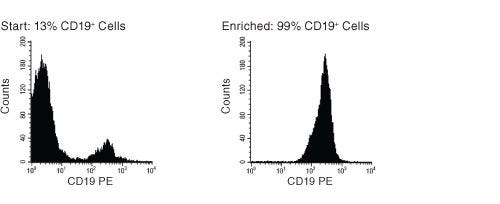
FACS Histogram Results With EasySep™ Human B Cell Enrichment Kit

Figure 1. FACS Histogram Results With EasySep™ Human B Cell Enrichment Kit

Starting with frozen mononuclear cells, the CD19+ cell content of the enriched fraction typically ranges from 95% - 99%.

Protocols and Documentation

Find supporting information and directions for use in the Product Information Sheet or explore additional protocols below.

Document Type
Product Name
Catalog #
Lot #
Language
Catalog #
19054
Lot #
All
Language
English
Catalog #
19054RF
Lot #
All
Language
English
Document Type
Safety Data Sheet 1
Catalog #
19054
Lot #
All
Language
English
Document Type
Safety Data Sheet 2
Catalog #
19054
Lot #
All
Language
English
Document Type
Safety Data Sheet 1
Catalog #
19054RF
Lot #
All
Language
English
Document Type
Safety Data Sheet 2
Catalog #
19054RF
Lot #
All
Language
English
Document Type
Safety Data Sheet 3
Catalog #
19054RF
Lot #
All
Language
English

Applications

This product is designed for use in the following research area(s) as part of the highlighted workflow stage(s). Explore these workflows to learn more about the other products we offer to support each research area.

Resources and Publications

Frequently Asked Questions

Can EasySep™ be used for either positive or negative selection?

Yes. The EasySep™ kits use either a negative selection approach by targeting and removing unwanted cells or a positive selection approach targeting desired cells. Depletion kits are also available for the removal of cells with a specific undesired marker (e.g. GlyA).

How does the separation work?

Magnetic particles are crosslinked to cells using Tetrameric Antibody Complexes (TAC). When placed in the EasySep™ Magnet, labeled cells migrate to the wall of the tube. The unlabeled cells are then poured off into a separate fraction.

Which columns do I use?

The EasySep™ procedure is column-free. That's right - no columns!

How can I analyze the purity of my enriched sample?

The Product Information Sheet provided with each EasySep™ kit contains detailed staining information.

Can EasySep™ separations be automated?

Yes. RoboSep™, the fully automated cell separator, automates all EasySep™ labeling and cell separation steps.

Can EasySep™ be used to isolate rare cells?

Yes. We recommend a cell concentration of 2x10⁸ cells/mL and a minimum working volume of 100 µL. Samples containing 2x10⁷ cells or fewer should be suspended in 100 µL of buffer.

Are the EasySep™ magnetic particles FACS-compatible?

Yes, the EasySep™ particles are flow cytometry-compatible, as they are very uniform in size and about 5000X smaller than other commercially available magnetic beads used with column-free systems.

Can the EasySep™ magnetic particles be removed after enrichment?

No, but due to the small size of these particles, they will not interfere with downstream applications.

Can I alter the separation time in the magnet?

Yes; however, this may impact the kit's performance. The provided EasySep™ protocols have already been optimized to balance purity, recovery and time spent on the isolation.

For positive selection, can I perform more than 3 separations to increase purity?

Yes, the purity of targeted cells will increase with additional rounds of separations; however, cell recovery will decrease.

How does the binding of the EasySep™ magnetic particle affect the cells? is the function of positively selected cells altered by the bound particles?

Hundreds of publications have used cells selected with EasySep™ positive selection kits for functional studies. Our in-house experiments also confirm that selected cells are not functionally altered by the EasySep™ magnetic particles.

If particle binding is a key concern, we offer two options for negative selection. The EasySep™ negative selection kits can isolate untouched cells with comparable purities, while RosetteSep™ can isolate untouched cells directly from whole blood without using particles or magnets.

Publications (37)

Single-nucleus epigenomic profiling of the adult human central nervous system unveils epigenetic memory of developmental programs M. Kabbe et al. Nature Neuroscience 2026 Mar

Abstract

Neural cells in the adult human central nervous system (CNS) display extensive transcriptional heterogeneity. How different layers of epigenetic regulation underpin this heterogeneity is poorly understood. Here we profile, at the single-nuclei epigenomic level, distinct regions of the adult human CNS, for chromatin accessibility and simultaneously for the histone modifications H3K27me3 and H3K27ac. We unveil a putative SOX10 enhancer and primed chromatin signatures at HOX loci in spinal-cord-derived human oligodendroglia (OLG) and astrocytes, but not microglia. These signatures in adult OLG were reminiscent of developmental profiles but were decoupled from robust gene expression. Moreover, using high-resolution Micro-C, we show that induced pluripotent stem-cell-derived human OLGs exhibit a HOX chromatin architecture compatible with the primed chromatin in adult OLGs, bearing a strong resemblance not only to OLG developmental architecture but also to high-grade pontine gliomas. Thus, epigenetic memory from developmental states in adult OLG not only enables them to promptly transcribe Hox family genes during regeneration but also makes them susceptible to gliomagenesis. Single-nucleus epigenomic maps of the adult human brain and spinal cord reveal that adult oligodendroglia retain developmental chromatin patterns, suggesting a molecular memory that may shape repair processes and cancer vulnerability.
Mitochondrial dysfunction and autophagy activation underlie NK cell impairment induced by Cannabis. A. Bolduc et al. PloS one 2026 Jun

Abstract

Cannabis use continues to rise in Canada, prompting concerns due to its potential impact on immune function. This study investigated the effect of a cannabis joint extract (CJE) on natural killer (NK) cells and explored the mechanisms underlying its potential anti-inflammatory properties. Peripheral blood mononuclear cells (PBMCs) were exposed to varying concentrations of CJE to assess cytotoxicity. Flow cytometry was employed to evaluate oxidative stress, autophagy, mitochondrial membrane potential, caspase-3 activation, and DNA damage. Additionally, NK cell cytotoxicity, migration, and adhesion were analyzed. Data indicated that CJE exposure led to dose-dependent cytotoxicity in NK cells, primarily through apoptosis. Specifically, at a concentration of 3 μg/mL, CJE significantly increased reactive oxygen species (ROS), autophagy markers, caspase activation, and DNA damage, while reducing mitochondrial membrane potential. Moreover, CJE impaired NK cell-mediated killing of HeLa cells, though their migratory and adhesive abilities were unaffected. These findings evidence that cannabis can detrimentally affect NK cell viability and function via mechanisms involving autophagy and caspase-dependent apoptosis.
In vitro recapitulation of intramuscular mRNA vaccination with naive and recall antigens using a human lymphoid follicle chip platform. Y. Zhai et al. iScience 2026 Jul

Abstract

Predicting the efficacy and toxicity of mRNA vaccines remains challenging. We describe an in vitro human model that replicates immune responses to lipid nanoparticle (LNP)-based mRNA vaccines upon intramuscular injection. Vaccines are administered to human skeletal myoblasts and antigen-presenting cells (APCs). Non-amplifying mRNA (NAM) vaccines directly induce antigen expression in APCs, whereas self-amplifying mRNA (SAM) vaccines require muscle cell-APC contact. The transfer of APCs and soluble factors to a microfluidic human lymphoid follicle chip (LF Chip), to mimic lymphatic drainage, induces LF expansion, de novo immunoglobulin G (IgG) production against a naive antigen, and cytokine release, with responses varying by LNP type. Similar vaccination of LF chips with Moderna vaccine against SARS-CoV-2 spike recall antigen generates neutralizing antibodies and induces somatic hypermutation (SHM). These studies offer an all-human alternative for evaluating vaccine-induced immunity, limiting the need for non-human primates and accelerating vaccine development.