ImmunoCult™ Human CD3/CD28 T Cell Activator

cGMP, human T cell activation and expansion reagent

ImmunoCult™ Human CD3/CD28 T Cell Activator

cGMP, human T cell activation and expansion reagent
From: 3,911 USD
Catalog #
(Select a product)
cGMP, human T cell activation and expansion reagent
Add to Wish List

Product Advantages

  • Activate T cells with confidence for use in clinical applications using activators produced under relevant cGMPs
  • Achieve robust activation without the use of magnetic beads, feeder cells, or antigens
  • Maintain a high viability of activated and expanded T cells with gentle activation stimulus
  • Rely on a highly stable, filter-sterilized soluble reagent

Overview

Achieve robust activation and expansion of human T cells for use in clinical applications–without the use of magnetic beads, feeder cells, or antigens.

This product’s gentle activation stimulus ensures a high viability of activated T cells, which can be further expanded in ImmunoCult™-XF—a high-performance T cell expansion medium manufactured under relevant cGMP regulations and guidelines. ImmunoCult™ Human CD3/CD28 T Cell Activator consists of soluble antibody complexes that bind to and cross-link CD3 and CD28 cell surface ligands, thereby providing the required primary and co-stimulatory signals for T cell culture and activation.

ImmunoCult™ Human CD3/CD28 T Cell Activator is designed for cell therapy clinical research applications by qualifying it for use as an ancillary material (AM) following the framework outlined in USP<1043> and/or PH. EUR. 5.2.12. STEMCELL can work with you to qualify this reagent as an AM under an approved Investigational New Drug (IND) application, Biological Licensing Application (BLA), or Clinical Trial Application (CTA). Learn more about how we can support your regulatory needs here.

To request a Letter of Authorization (LOA) for the FDA Master File for ImmunoCult™ Human CD3/CD28 T Cell Activator, click here.
Contains
• Anti-human CD3 monospecific antibody complex
• Anti-human CD28 monospecific antibody complex
• Phosphate buffered-saline (PBS), containing 0.02% TWEEN® 20
Subtype
Supplements
Cell Type
T Cells, T Cells, CD4+, T Cells, CD8+
Species
Human
Application
Activation, Cell Culture, Expansion
Brand
ImmunoCult
Area of Interest
Cancer, Immunology, Cell Therapy Development

Data Figures

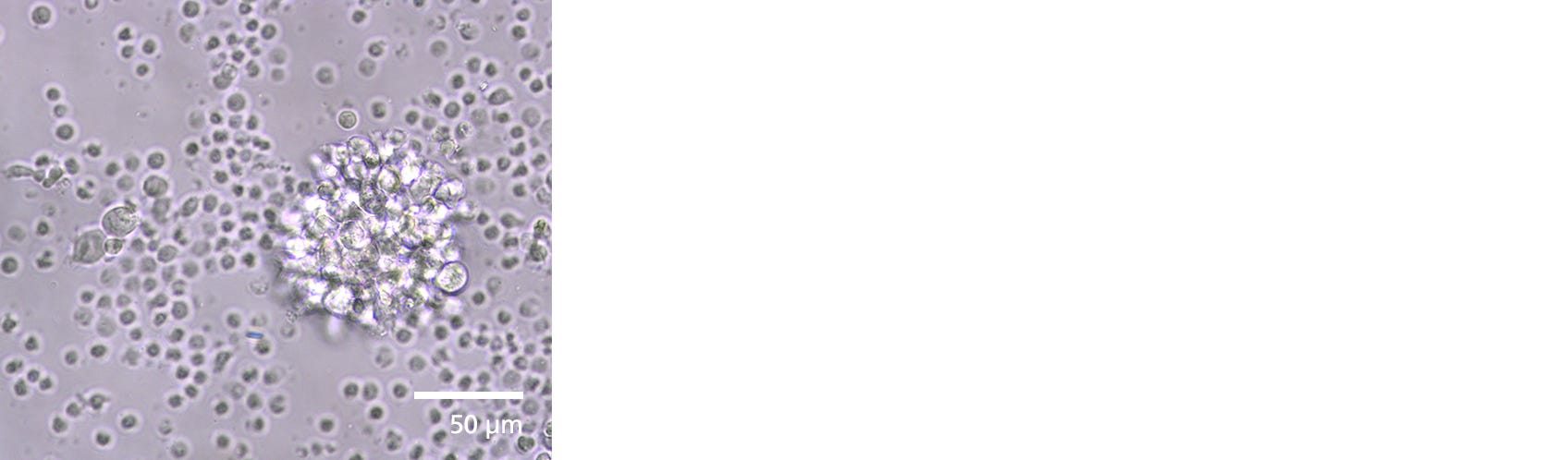
Activated human T cells clustering together.

Figure 1. Morphology of Activated Human T Cells Stimulated with ImmunoCult™ Human CD3/CD28 T Cell Activator

A clustered morphology is seen in activated human T cells. Cells were isolated using EasySep™ Human T Cell Isolation Kit, stimulated with ImmunoCult™ Human CD3/CD28 T Cell Activator for 3 days in ImmunoCult™-XF supplemented with recombinant human interleukin-2 (rhIL-2).

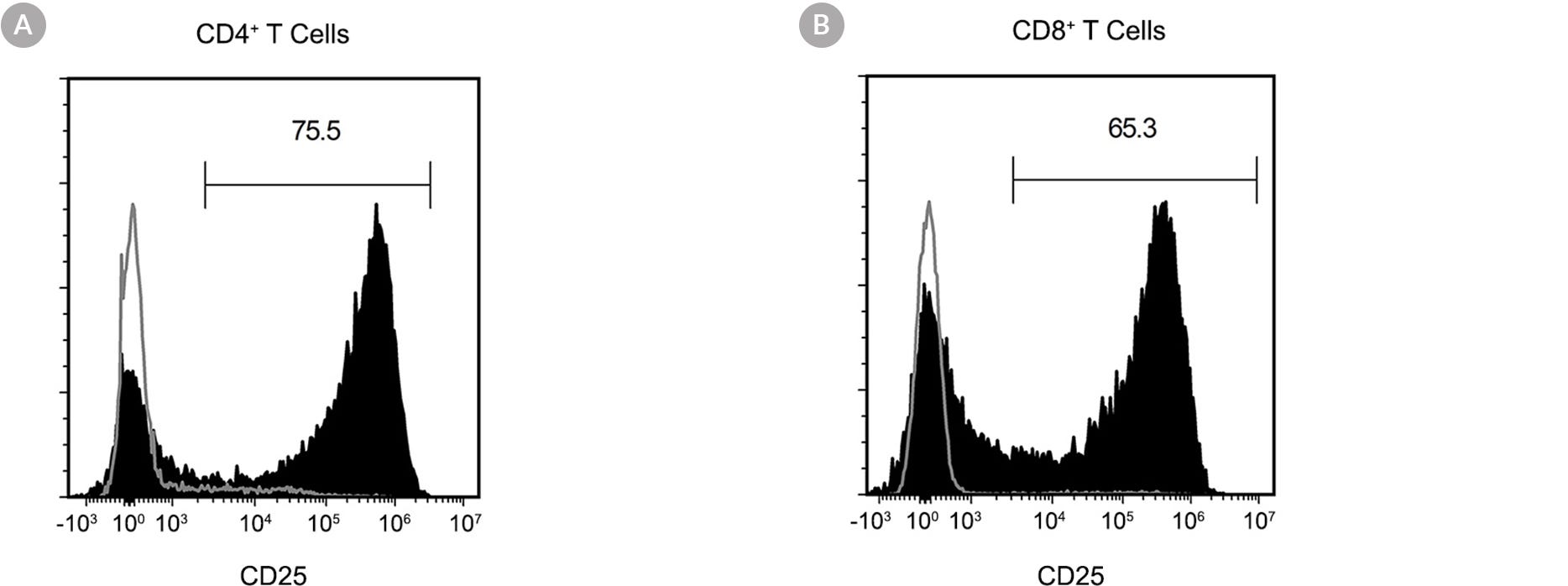
Flow cytometry data showing human T cell activation assessed by CD25 expression.

Figure 2. Activation of Human T Cells Stimulated with ImmunoCult™ Human CD3/CD28 Activator.

Human T cells were stimulated with ImmunoCult™ Human CD3/CD28 T Cell Activator and cultured in ImmunoCult™-XF . Activation of viable CD4+ and CD8+ T cells were assessed by CD25 expression, using flow cytometry. Following 3 days of culture, the frequency of CD25-positive cells was (A) 75.5% for CD4+ T cells and (B) 65.3% for CD8+ T cells . The gray line depicts day 3 CD4+ and CD8+ T cells cultured without ImmunoCult™ Human CD3/CD28 T Cell Activator.

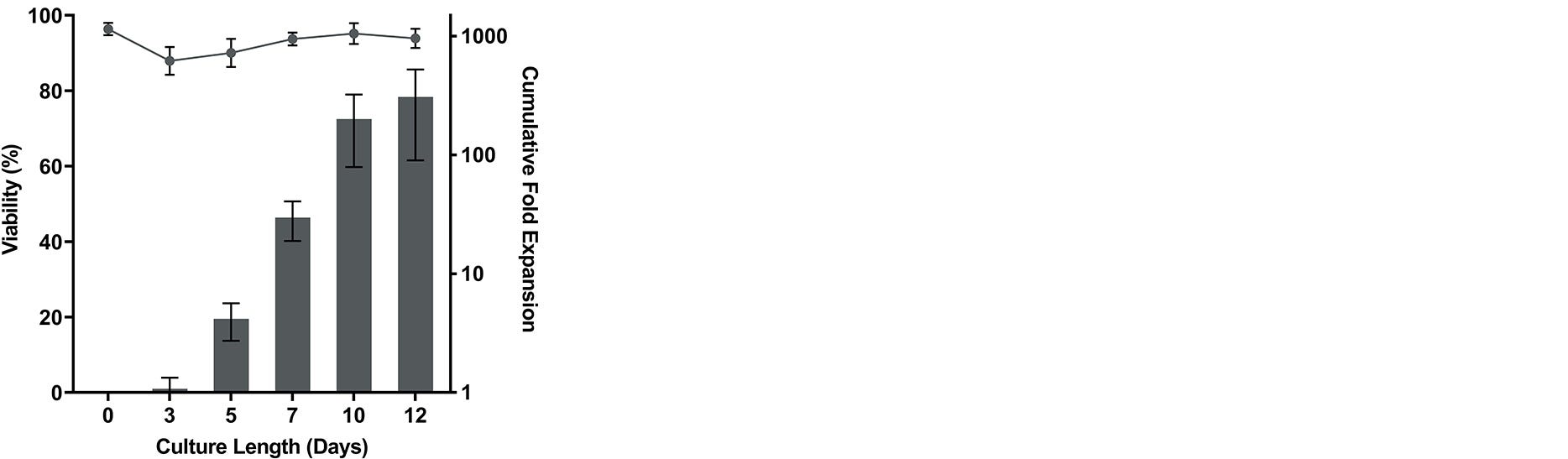
Human T cell cumulative fold expansion and activation during a 12-day culture period.

Figure 3. Robust Human T Cell Expansion and High Viability Achieved Using ImmunoCult™ Human CD3/CD28 T Cell Activator

Human T cells were expanded over 12 days with ImmunoCult™ Human CD3/CD28 T Cell Activator in ImmunoCult™-XF supplemented with rhIL-2. On day 0, 1 x 10^6 isolated human T cells were stimulated with 25 μL of ImmunoCult™ Human CD3/CD28 T Cell Activator in ImmunoCult™-XF supplemented rhIL-2. No additional ImmunoCult™ Human CD3/CD28 T Cell Activator was added during the 12-day culture period (mean ± SD in 3 experiments with 7 donors).

Protocols and Documentation

Find supporting information and directions for use in the Product Information Sheet or explore additional protocols below.

Document Type
Product Name
Catalog #
Lot #
Language
Catalog #
100-0784
Lot #
All
Language
English
Document Type
Safety Data Sheet
Catalog #
100-0784
Lot #
All
Language
English

Applications

This product is designed for use in the following research area(s) as part of the highlighted workflow stage(s). Explore these workflows to learn more about the other products we offer to support each research area.

Resources and Publications

Publications (45)

Intermittent Fasting Reduces Taurine Availability and Promotes Antitumor Immunity Through PERK Attenuation-Associated Paraptosis-Like Cell Death in Colorectal Cancer. B. Song et al. Advanced science (Weinheim, Baden-Wurttemberg, Germany) 2026 Oct

Abstract

Intermittent fasting (IF) exerts antitumor activity in colorectal cancer (CRC), but the tumor-intrinsic metabolic mechanism linking nutrient restriction to antitumor immunity remains unclear. In this study, IF reduced taurine availability and suppressed tumor growth in a CD8+ T cell-dependent manner. Taurine supplementation attenuated this effect, whereas pharmacological inhibition of taurine uptake partially recapitulated fasting-associated tumor suppression in preclinical models. Mechanistically, taurine is associated with the endoplasmic reticulum chaperone GRP78 and contributes to the maintenance of PERK abundance under nutrient stress. As a metabolic consequence of IF, taurine restriction impaired PERK stability, suppressed downstream ERO1A signaling, and redirected CRC cells from stress tolerance toward paraptosis-like immunogenic stress. PERK loss enhanced CD8+ T-cell activation, remodeled the tumor microenvironment toward a less suppressive state, and supported tumor control in combination with anti-PD-1 therapy. The present study identified taurine restriction as a functional metabolic feature of IF that compromises PERK-dependent stress adaptation and promotes antitumor immunity in CRC.
Mesenchymal Stromal Cells Respond to SARS-CoV-2 Peptides and Exhibit Altered T-Cell Regulatory Capacity S. Summer et al. Cells 2026 Mar

Abstract

Background: MSCs possess strong immunoregulatory properties and play a central role in maintaining immune homeostasis by limiting inflammatory responses. Their function is highly plastic and influenced by environmental cues, including viral signals. How SARS-CoV-2-derived antigens affect MSC immunoregulation remains incompletely understood. This study aimed to investigate the impact of SARS-CoV-2 peptides on MSC-mediated immune modulation of T-cells. Methods: MSCs were stimulated directly with SARS-CoV-2 spike protein S peptides or cocultured with SARS-CoV-2 peptide-activated T-cells. TLR4 surface expression and receptor downstream signaling were assessed to evaluate pathway activation. MSC immunoregulatory function was analyzed by measuring suppression of TNF-α and IFN-γ expression and induction of CD4+FOXP3+ regulatory T-cells. TLR4 inhibition and lipopolysaccharide (LPS) stimulation were used to examine pathway specificity and interaction. Results: SARS-CoV-2 peptides activated TLR4-associated signaling in MSCs, increasing TLR4 expression and NF-κB phosphorylation. Peptide-treated MSCs showed impaired suppression of pro-inflammatory cytokines and reduced induction of regulatory T-cells. TLR4 inhibition prevented these effects. LPS induced similar effects, while combining LPS and peptide stimulation partially restored physiological T-cell cytokine suppression. Conclusions: SARS-CoV-2 peptides modulate MSC immunoregulatory function on T-cells via TLR4-dependent mechanisms.
CRISPR-mediated excision of HTLV-1 reduces proviral loads in PBMCs from HAM/TSP patients. S. Brancazio et al. Journal of neurovirology 2026 Aug

Abstract

CRISPR technology is emerging as a promising therapeutic approach for eliminating chronic viral infections, such as herpesviruses and HIV. Here, for the first time, we demonstrate in vitro that CRISPR can be used to excise the HTLV-1 genome and reduce proviral loads in PBMCs from HAM/TSP (HTLV-1-associated myelopathy/tropical spastic paraparesis) patients. Single treatment with CRISPR-RNP (ribonucleoprotein) complexes composed of two gRNAs targeting the HTLV-1 env gene and 3'LTR sequences resulted in excision of a 2613 bp segment of the proviral genome, spanning tax and HBZ genes, without detectable off-target activity. Furthermore, CRISPR treatment led to over 50% reduction in proviral loads 5 days post-electroporation. Our data indicate that CRISPR-Cas9 gene editing can be used as a therapeutic strategy to eliminate HTLV-1 DNA from infected cells and may serve as a platform for curing HAM/TSP.