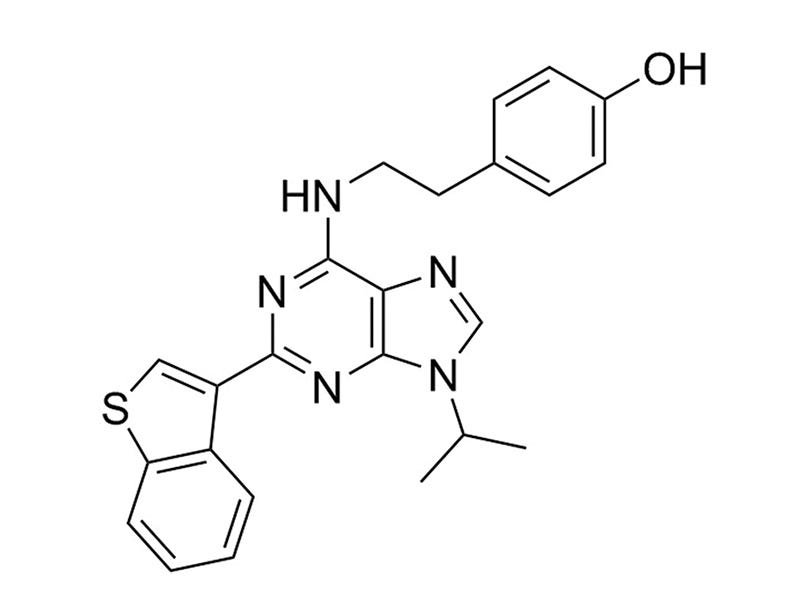
StemRegenin 1

Aryl hydrocarbon receptor (AHR) antagonist

StemRegenin 1

Aryl hydrocarbon receptor (AHR) antagonist
From: 154 USD
Catalog #
(Select a product)
Aryl hydrocarbon receptor (AHR) antagonist
Add to Wish List

Overview

StemRegenin1 (SR1) is an antagonist of the aryl hydrocarbon receptor (AHR). It promotes ex vivo expansion of CD34+ human hematopoietic stem cells and the generation of CD34+ hematopoietic progenitor cells from non-human primate induced pluripotent stem cells. SR1 has been shown to collaborate with UM729 in preventing differentiation of acute myeloid leukemia (AML) cells in culture. SR1 also stimulates the proliferation and differentiation of CD34+ hematopoietic progenitor cells into dendritic cells.

MAINTENANCE AND SELF-RENEWAL
· Promotes maintenance and expansion of human hematopoietic stem cells in culture (Boitano et al., Csaszar et al.).

DIFFERENTIATION
· Stimulates differentiation of CD34+ hematopoietic progenitor cells into functional human dendritic cells (Thordardottir et al.).
· Promotes hematopoietic differentiation of induced pluripotent stem cells (iPS). (Gori et al.).

CANCER RESEARCH
· Collaborates with UM729 in preventing differentiation of AML cells in culture (Pabst et al.).
Cell Type
Cancer Cells and Cell Lines, Dendritic Cells, Hematopoietic Stem and Progenitor Cells, Leukemia/Lymphoma Cells, Pluripotent Stem Cells
Species
Human, Mouse, Non-Human Primate, Other, Rat
Application
Differentiation, Expansion
Area of Interest
Cancer, Stem Cell Biology
CAS Number
1227633-49-9
Chemical Formula
C₂₄H₂₃N₅OS
Purity
≥ 98%
Pathway
AHR
Target
AHR

Protocols and Documentation

Find supporting information and directions for use in the Product Information Sheet or explore additional protocols below.

Document Type
Product Name
Catalog #
Lot #
Language
Product Name
StemRegenin 1
Catalog #
72342, 72344
Lot #
All
Language
English
Document Type
Safety Data Sheet
Product Name
StemRegenin 1
Catalog #
72342, 72344
Lot #
All
Language
English

Applications

This product is designed for use in the following research area(s) as part of the highlighted workflow stage(s). Explore these workflows to learn more about the other products we offer to support each research area.

Resources and Publications

Publications (11)

Single-cell and in vivo profiling reveal heterogeneous and organ-specific CRISPR-Cas9 off-target and translocation outcomes. A. Madsen et al. Nature communications 2026 Aug

Abstract

CRISPR-Cas9 holds promise for treating genetic disease, but rare off-target mutations and structural variants remain as key safety concerns, especially at scales relevant to therapy. Here, we establish workflows to resolve Cas9 off-target activity in vitro at single-cell resolution and in vivo across different tissues. Using clonally expanded electroporated mouse embryos and embryonic stem cells, we reveal that individual cells exhibit unique off-target and translocation profiles, including events missed in bulk analyses. Integrating single-cell editing with chromatin accessibility, transcription, and DNA methylation measurements suggest that sequence-independent features modulate Cas9 access and cleavage, with preferential editing in regions characterized by open chromatin and lower methylation. In Cas9-inducible mouse models, editing analyses reveal organ-distinct off-target spectra, DNA repair pathway usage, indel patterns, and markedly varying translocation propensity between tissues. These findings demonstrate that off-target activity is heterogeneous across cells and context-dependent across organs, motivating sensitive single-cell analyses and organ-specific evaluation in preclinical development to more accurately assess risk and improve the safety of CRISPR-based genomic medicines.
Design, Synthesis and Biological Evaluation of Pyrazolopyrimidine Derivatives as Aryl Hydrocarbon Receptor Antagonists for Colorectal Cancer Immunotherapy B. Choi et al. Pharmaceutics 2025 Oct

Abstract

Background: Aryl hydrocarbon receptor (AhR) is a transcription factor that is involved in the regulation of immunity. AhR inhibits T cell activation in tumors, which induces immune suppression in the blood and solid tumors. We identified effective small-molecule AhR antagonists for cancer immunotherapy. Methods: A new series of pyrazolopyrimidine derivatives was synthesized and evaluated for AhR antagonistic activity. Results: Compound 7k exhibited significant antagonistic activity against AhR in a transgenic zebrafish model. In addition, 7k exhibited good AhR antagonist activity, with a half-maximal inhibitory concentration (IC50) of 13.72 nM. Compound 7k showed a good pharmacokinetic profile with an oral bioavailability of 71.0% and a reasonable half-life of 3.77 h. Compound 7k selectively exerted anti-proliferative effects on colorectal cancer cells without affecting normal cells, concurrently suppressing the expression of AhR-related genes and the PD-1/PD-L1 signaling pathway. Compound 7k exhibited potent antitumor activity in syngeneic colorectal cancer models. Importantly, the combination of anti-PD1 and compound 7k enhanced antitumor immunity by augmenting cytotoxic T lymphocyte (CTL)-mediated activity. Conclusions: Collectively, a new pyrazolopyrimidine derivative, 7k, shows promise as a potential therapeutic agent for treating colorectal cancer.
Donor insertion into CX3CR1 allows epigenetic modulation of a constitutive promoter on hematopoietic stem cells and its activation upon myeloid differentiation I. Ramos-Hernández et al. Nucleic Acids Research 2025 Apr

Abstract

AbstractTo improve ex vivo gene therapy strategies involving hematopoietic stem and progenitor cells (HSPCs), we propose a novel knock-in strategy (named KI-Ep) aiming to achieve transgene regulation of the inserted cassette through the acquisition of naturally occurring epigenetic marks. Based on this hypothesis, we selected CX3CR1 (a myeloid-specific gene presenting a poised histone signature on primitive HSPCs) as safe harbor to generate KI-Ep HSPCs. We demonstrated that, unlike the expression pattern achieved with lentiviral vectors (LVs), the insertion of a constitutive expression cassette into the intron 1 of the CX3CR1 locus (CX3CR1-I) in HSPCs resulted in very low expression levels in the more primitive HSPCs but, crucially, strong expression in HSPC-differentiated populations (especially myeloid cells), both in vitro and in vivo. Furthermore, we showed that the promoter of the expression cassette inserted into CX3CR1-I acquired epigenetic marks associated with poised genes during the HSPC stage. These marks transitioned to activated histone states upon KI-Ep HSPCs differentiation. In summary, here, we introduce the KI-Ep concept which enables the epigenetic modulation of the inserted transgene during the HSPCs stem cell stages and its subsequent activation upon differentiation. Graphical Abstract Graphical Abstract