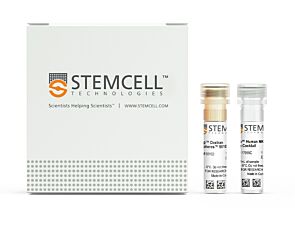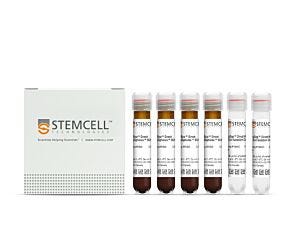
EasySep™ Human NK Cell Enrichment Kit

Immunomagnetic negative isolation of untouched human NK cells
EasySep™ Human NK Cell Enrichment Kit

Immunomagnetic negative isolation of untouched human NK cells

From: 971 USD
Catalog #
(Select a product)
Immunomagnetic negative isolation of untouched human NK cells
Add to Wish List

Product Advantages


  • Fast, easy-to-use and column-free

  • Up to 95% purity

  • Untouched, viable cells

What's Included

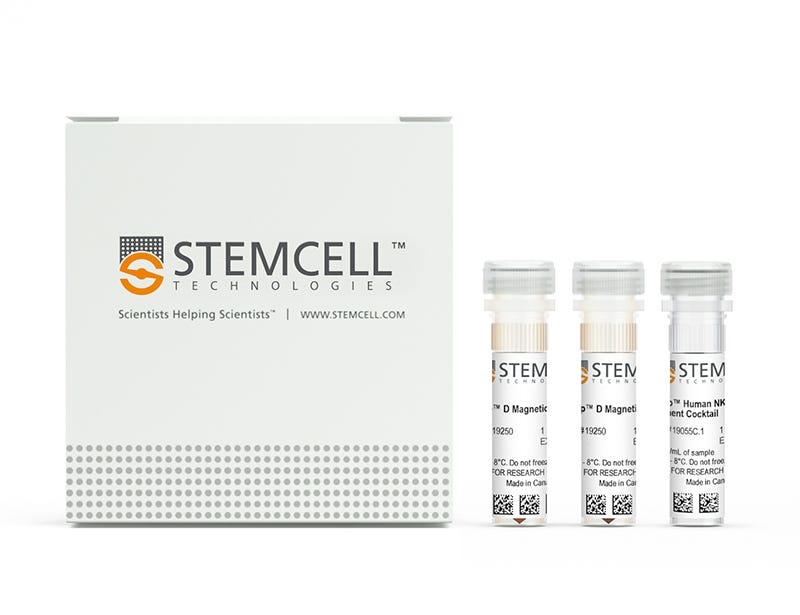
  • EasySep™ Human NK Cell Enrichment Kit (Catalog #19055)
    • EasySep™ Human NK Cell Enrichment Cocktail, 1 mL
    • EasySep™ D Magnetic Particles, 2 x 1 mL
  • RoboSep™ Human NK Cell Enrichment Kit with Filter Tips (Catalog #19055RF)
    • EasySep™ Human NK Cell Enrichment Cocktail, 1 mL
    • EasySep™ D Magnetic Particles, 2 x 1 mL
    • RoboSep™ Buffer (Catalog #20104)
    • RoboSep™ Filter Tips (Catalog #20125)
Products for Your Protocol
To see all required products for your protocol, please consult the Protocols and Documentation.

Overview

Easily and efficiently isolate highly purified human natural killer (NK) cells from fresh or previously frozen human peripheral blood mononuclear cells (PBMCs) or lysed leukapheresis samples by immunomagnetic negative selection, with the EasySep™ Human NK Cell Enrichment Kit. Widely used in published research for more than 20 years, EasySep™ combines the specificity of monoclonal antibodies with the simplicity of a column-free magnetic system.

In this EasySep™ negative selection procedure, unwanted cells are labeled with antibody complexes and magnetic particles. The following unwanted cells are targeted for removal: granulocytes, T cells, B cells, monocytes, dendritic cells, and erythroid cells. The magnetically labeled cells are then separated from the untouched desired human NK cells by using an EasySep™ magnet and simply pouring or pipetting the desired cells into a new tube. Following magnetic cell isolation, the desired NK cells are ready for downstream applications such as flow cytometry, culture, or DNA/RNA extraction.

For even faster cell isolations, we recommend the EasySep™ Human NK Cell Isolation Kit (Catalog #17955) which isolates cells in just 8 minutes.

Learn more about how immunomagnetic EasySep™ technology works or how to fully automate immunomagnetic cell isolation with RoboSep™. Alternatively, choose ready-to-use, ethically sourced, primary Human Peripheral Blood NK Cells, Frozen isolated with EasySep™ Human NK Cell Enrichment Kit. Explore additional products optimized for your workflow, including culture media, supplements, antibodies, and more.
Magnet Compatibility
• EasySep™ Magnet (Catalog #18000)
• “The Big Easy” EasySep™ Magnet (Catalog #18001)
• Easy 50 EasySep™ Magnet (Catalog #18002)
• EasyPlate™ EasySep™ Magnet (Catalog 18102)
• EasyEights™ EasySep™ Magnet (Catalog #18103)
• RoboSep™-S (Catalog #21000)
Subtype
Cell Isolation Kits
Cell Type
NK Cells
Species
Human
Sample Source
PBMC
Selection Method
Negative
Application
Cell Isolation
Brand
EasySep, RoboSep
Area of Interest
Immunology

Data Figures

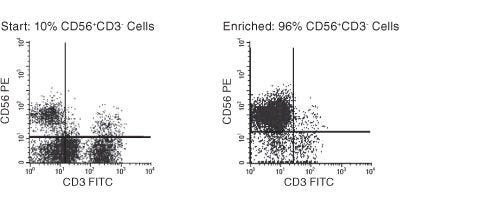
FACS Profile Results With EasySep™ Human NK Cell Enrichment Kit

Figure 1. FACS Profile Results With EasySep™ Human NK Cell Enrichment Kit

The NK cell content of the enriched fraction varies, depending on the starting sample. Starting with previously frozen mononuclear cells containing more than 10% NK cells, the NK cell content of the enriched fraction typically ranges from 73% - 95%. Purities may be lower when starting with samples containing less than 10% NK cells.

Protocols and Documentation

Find supporting information and directions for use in the Product Information Sheet or explore additional protocols below.

Document Type
Product Name
Catalog #
Lot #
Language
Catalog #
19055RF
Lot #
All
Language
English
Catalog #
19055
Lot #
All
Language
English
Document Type
Safety Data Sheet 1
Catalog #
19055RF
Lot #
All
Language
English
Document Type
Safety Data Sheet 2
Catalog #
19055RF
Lot #
All
Language
English
Document Type
Safety Data Sheet 3
Catalog #
19055RF
Lot #
All
Language
English
Document Type
Safety Data Sheet 1
Catalog #
19055
Lot #
All
Language
English
Document Type
Safety Data Sheet 2
Catalog #
19055
Lot #
All
Language
English

Applications

This product is designed for use in the following research area(s) as part of the highlighted workflow stage(s). Explore these workflows to learn more about the other products we offer to support each research area.

Resources and Publications

Frequently Asked Questions

Can EasySep™ be used for either positive or negative selection?

Yes. The EasySep™ kits use either a negative selection approach by targeting and removing unwanted cells or a positive selection approach targeting desired cells. Depletion kits are also available for the removal of cells with a specific undesired marker (e.g. GlyA).

How does the separation work?

Magnetic particles are crosslinked to cells using Tetrameric Antibody Complexes (TAC). When placed in the EasySep™ Magnet, labeled cells migrate to the wall of the tube. The unlabeled cells are then poured off into a separate fraction.

Which columns do I use?

The EasySep™ procedure is column-free. That's right - no columns!

How can I analyze the purity of my enriched sample?

The Product Information Sheet provided with each EasySep™ kit contains detailed staining information.

Can EasySep™ separations be automated?

Yes. RoboSep™, the fully automated cell separator, automates all EasySep™ labeling and cell separation steps.

Can EasySep™ be used to isolate rare cells?

Yes. We recommend a cell concentration of 2x10⁸ cells/mL and a minimum working volume of 100 µL. Samples containing 2x10⁷ cells or fewer should be suspended in 100 µL of buffer.

Are the EasySep™ magnetic particles FACS-compatible?

Yes, the EasySep™ particles are flow cytometry-compatible, as they are very uniform in size and about 5000X smaller than other commercially available magnetic beads used with column-free systems.

Can the EasySep™ magnetic particles be removed after enrichment?

No, but due to the small size of these particles, they will not interfere with downstream applications.

Can I alter the separation time in the magnet?

Yes; however, this may impact the kit's performance. The provided EasySep™ protocols have already been optimized to balance purity, recovery and time spent on the isolation.

For positive selection, can I perform more than 3 separations to increase purity?

Yes, the purity of targeted cells will increase with additional rounds of separations; however, cell recovery will decrease.

How does the binding of the EasySep™ magnetic particle affect the cells? is the function of positively selected cells altered by the bound particles?

Hundreds of publications have used cells selected with EasySep™ positive selection kits for functional studies. Our in-house experiments also confirm that selected cells are not functionally altered by the EasySep™ magnetic particles.

If particle binding is a key concern, we offer two options for negative selection. The EasySep™ negative selection kits can isolate untouched cells with comparable purities, while RosetteSep™ can isolate untouched cells directly from whole blood without using particles or magnets.

Publications (69)

Mitochondrial dysfunction and autophagy activation underlie NK cell impairment induced by Cannabis. A. Bolduc et al. PloS one 2026 Jun

Abstract

Cannabis use continues to rise in Canada, prompting concerns due to its potential impact on immune function. This study investigated the effect of a cannabis joint extract (CJE) on natural killer (NK) cells and explored the mechanisms underlying its potential anti-inflammatory properties. Peripheral blood mononuclear cells (PBMCs) were exposed to varying concentrations of CJE to assess cytotoxicity. Flow cytometry was employed to evaluate oxidative stress, autophagy, mitochondrial membrane potential, caspase-3 activation, and DNA damage. Additionally, NK cell cytotoxicity, migration, and adhesion were analyzed. Data indicated that CJE exposure led to dose-dependent cytotoxicity in NK cells, primarily through apoptosis. Specifically, at a concentration of 3 μg/mL, CJE significantly increased reactive oxygen species (ROS), autophagy markers, caspase activation, and DNA damage, while reducing mitochondrial membrane potential. Moreover, CJE impaired NK cell-mediated killing of HeLa cells, though their migratory and adhesive abilities were unaffected. These findings evidence that cannabis can detrimentally affect NK cell viability and function via mechanisms involving autophagy and caspase-dependent apoptosis.
Monoclonal neutralizing antibodies elicited by infection with Kaposi sarcoma-associated herpesvirus reveal critical sites of vulnerability on gH/gL Y-H. Wan et al. PLOS Pathogens 2026 Jan

Abstract

Kaposi sarcoma-associated herpesvirus (KSHV) is an oncogenic virus that causes Kaposi sarcoma, primary effusion lymphoma and multicentric Castleman disease. A vaccine that prevents KSHV infection or serves in the treatment of KSHV-related diseases represents a critical unmet need, however, the types of immune responses a vaccine should elicit have not been well defined. The gH/gL glycoprotein complex is an important target of KSHV-neutralizing antibodies, but the epitope specificities targeted by these antibodies remain unknown. Here, we isolated 12 gH/gL-specific monoclonal antibodies (mAbs) from KSHV-infected donors and performed structure/function analyses. These mAbs bind recombinant gH/gL with nanomolar affinities and epitope binning analyses revealed that the mAbs bind to 5 epitope clusters on gH/gL. Seven mAbs were able to neutralize KSHV infection of epithelial cell lines. Two potent neutralizing mAbs mapped to the EphA2 binding site as determined by inhibition of the receptor-ligand interaction and negative stain electron microscopy (nsEM) of the mAb/gH/gL complex. The epitopes of other neutralizing mAbs targeting novel sites of vulnerability were determined by a combination of cryogenic electron microscopy and nsEM. Together, these mAbs help to define the relevant epitope targets for KSHV vaccine design, have utility in understanding the role of antibodies in preventing KSHV infection, enable the development of immunotherapy approaches, and provide valuable tools to understand the molecular details of the KSHV entry process. Author summaryKSHV is an oncogenic virus that can cause cancer in infected individuals. The virus is most prevalent in sub-Saharan Africa and in men who have sex with men. It is possible this virus could be prevented with an effective vaccine, however, the immune response to this virus has not been well defined. gH/gL, a protein essential for viral fusion, plays an important role in infection and could be a possible vaccine target. To better understand the antibody response to this protein, we sought to isolate and characterize monoclonal antibodies that can bind gH/gL and neutralize viral infection. In this study, we isolate and characterize twelve monoclonal antibodies that could bind to five different regions of the gH/gL protein. Seven of these antibodies can neutralize infection, with two being able to block the gH/gL EphA2 receptor-ligand interaction.
Chimeric allergen receptor regulatory T cells suppress birch pollen allergic airway inflammation. A. Alcaraz-Serna et al. The Journal of experimental medicine 2026 Aug

Abstract

Asthma is a deadly chronic respiratory disease affecting over 300 million people. While allergen immunotherapy remains the only disease-modifying treatment, it is poorly applicable for patients with severe asthma. Here, we explored the therapeutic potential of regulatory T cells (Tregs) armed with chimeric allergen receptors-named CAlleR-redirected against the major allergen of birch pollen Bet v1. Four novel anti-Bet v1 antibodies were identified and used to engineer and functionally validate CAlleR. CAlleR Tregs showed specific in vitro activation and suppression and significantly reduced the airway hyperresponsiveness in birch pollen-sensitized mice. Mechanistically, CAlleR Tregs migrated to the lungs and mediastinal lymph nodes, interacted with CD11c+ dendritic cells, and were activated in a FcγR-dependent manner by cross-presenting Bet v1 stabilized with noncompetitive anti-Bet v1 antibodies. These findings unveil a novel mechanism for targeting soluble antigens and highlight the potential of CAlleR Tregs to prevent and treat severe allergies.