EasySep™ Release Human Biotin Positive Selection Kit

Immunomagnetic positive selection of biotin-conjugated antibody-labeled human cells using particle release technology

EasySep™ Release Human Biotin Positive Selection Kit

Immunomagnetic positive selection of biotin-conjugated antibody-labeled human cells using particle release technology

From: 936 USD
Catalog #
(Select a product)
Immunomagnetic positive selection of biotin-conjugated antibody-labeled human cells using particle release technology
Add to Wish List

Product Advantages


  • Highly purified cells labeled with biotinylated antibodies isolated from human tissue in less than 40 minutes

  • No-wash removal of EasySep™ Releasable RapidSpheres™

What's Included

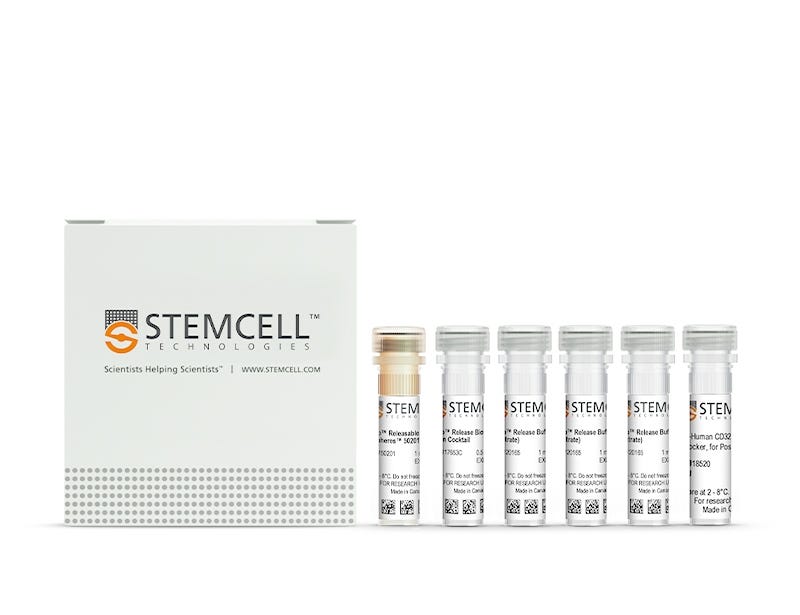
  • EasySep™ Release Human Biotin Positive Selection Kit (Catalog #17653)
    • EasySep™ Biotin Positive Cocktail, 0.5 mL
    • EasySep™ Releasable RapidSpheres™ 50201, 1 mL
    • EasySep™ Release Buffer (Concentrate), 3 x 1 mL
    • Anti-Human CD32 Blocker, 1 mL
Products for Your Protocol
To see all required products for your protocol, please consult the Protocols and Documentation.

Overview

Easily isolate highly purified and magnetic particle-free human cells labeled with biotinylated antibodies from fresh or previously frozen human peripheral blood mononuclear cells (PBMCs) and washed leukapheresis samples, by immunomagnetic positive selection, with the EasySep™ Release Human Biotin Positive Selection Kit. Widely used in published research for more than 20 years, EasySep™ combines the specificity of monoclonal antibodies with the simplicity of a column-free magnetic system.

In this EasySep™ positive selection procedure, desired cells are first labeled with antibody complexes recognizing biotin and magnetic particles called EasySep™ Releasable RapidSpheres™. Unlike traditional magnetic particles, which stay bound to the target cells, these RapidSpheres™ have a releasable feature. After separation using an EasySep™ magnet, bound magnetic particles are removed from the EasySep™-isolated, biotin antibody-labeled cells using a release agent. The final isolated fraction contains highly purified biotin+ cells that are immediately ready for downstream applications such as flow cytometry, culture, or DNA/RNA extraction. Following cell isolation with this EasySep™ kit, antibody complexes remain bound to the cell surface and may interact with Brilliant Violet™ antibody conjugates, polyethylene glycol-modified proteins, or other chemically related ligands.

This product replaces the EasySep™ Human Biotin Positive Selection Kit (Catalog #18553), providing highly purified particle-free cells.

Learn more about how immunomagnetic EasySep™ technology works. Explore additional products optimized for your workflow, including those for culture media, supplements, antibodies, and more.


Magnet Compatibility
• EasySep™ Magnet (Catalog #18000)
• “The Big Easy” EasySep™ Magnet (Catalog #18001)
• EasyPlate™ Magnet (Catalog #18102)
• EasyEights™ Magnet (Catalog #18103)
Subtype
Cell Isolation Kits
Cell Type
B Cells, Dendritic Cells, Granulocytes and Subsets, Hematopoietic Stem and Progenitor Cells, Macrophages, Marrow Stromal Cells, Mesenchymal Stem and Progenitor Cells, Monocytes, Mononuclear Cells, Myeloid Cells, NK Cells, Other, Plasma, T Cells
Species
Human
Sample Source
Leukapheresis, Other, PBMC
Selection Method
Positive
Application
Cell Isolation
Brand
EasySep
Area of Interest
Immunology

Data Figures

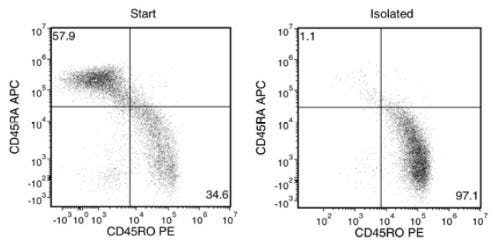
Typical EasySep™ Release Human Biotin Positive Selection Profile with PBMCs

Figure 1. Typical EasySep™ Release Human Biotin Positive Selection Profile with PBMCs

Starting with fresh PBMCs, the purities of the start and final isolated fractions are 34.6% and 97.1%, respectively, using a biotinylated anti-human CD45RO antibody and EasySep™ Release Human Biotin Positive Selection Kit (as assessed by labeling with CD45RO and CD45RA).

Typical EasySep™ Release Human Biotin Positive Selection Profile with Mouse Splenocytes

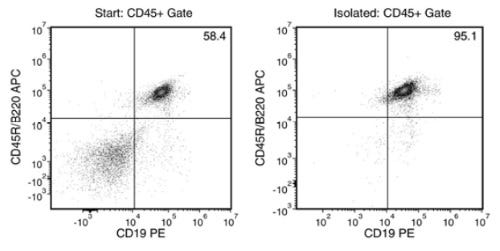
Figure 2. Typical EasySep™ Release Human Biotin Positive Selection Profile with Mouse Splenocytes

Starting with mouse splenocytes, the purities of the start and final isolated fractions are 58.4% and 95.1%, respectively, using a biotinylated anti-mouse CD19 antibody and EasySep™ Release Mouse Biotin Positive Selection Kit (as assessed by labeling with CD19 and CD45R/B220).

Protocols and Documentation

Find supporting information and directions for use in the Product Information Sheet or explore additional protocols below.

Document Type
Product Name
Catalog #
Lot #
Language
Catalog #
17653
Lot #
1000157902 or higher
Language
English
Catalog #
17653
Lot #
1000157901 or lower
Language
English
Document Type
Safety Data Sheet 1
Catalog #
17653
Lot #
All
Language
English
Document Type
Safety Data Sheet 2
Catalog #
17653
Lot #
All
Language
English
Document Type
Safety Data Sheet 3
Catalog #
17653
Lot #
All
Language
English
Document Type
Safety Data Sheet 4
Catalog #
17653
Lot #
All
Language
English
Document Type
Safety Data Sheet 5
Catalog #
17653
Lot #
All
Language
English

Resources and Publications

Publications (2)

Structure-guided engineering of immunotherapies targeting TRBC1 and TRBC2 in T cell malignancies Nature Communications 2024 Feb

Abstract

Peripheral T cell lymphomas are typically aggressive with a poor prognosis. Unlike other hematologic malignancies, the lack of target antigens to discriminate healthy from malignant cells limits the efficacy of immunotherapeutic approaches. The T cell receptor expresses one of two highly homologous chains [T cell receptor β-chain constant (TRBC) domains 1 and 2] in a mutually exclusive manner, making it a promising target. Here we demonstrate specificity redirection by rational design using structure-guided computational biology to generate a TRBC2-specific antibody (KFN), complementing the antibody previously described by our laboratory with unique TRBC1 specificity (Jovi-1) in targeting broader spectrum of T cell malignancies clonally expressing either of the two chains. This permits generation of paired reagents (chimeric antigen receptor-T cells) specific for TRBC1 and TRBC2, with preclinical evidence to support their efficacy in T cell malignancies. The T cell receptor β-chain is expressed in two isoforms, TRBC1 and TRBC2, with clonally expanded mature T cell lymphomas expressing one of them exclusively, while healthy T cells randomly express either TRBC1 or TRBC2. Here authors show structure-based design of a TRBC2-specific antibody, and depletion of malignant T cells carrying TRBC1 or TRBC2 with CAR-T cells against the cognate receptor chain in murine models.
Regulatory Programs of B-cell Activation and Germinal Center Reaction Allow B-ALL Escape from CD19 CAR T-cell Therapy. N. G. Im et al. Cancer immunology research 2022 sep

Abstract

Chimeric antigen receptor (CAR) T-cell therapy has led to tremendous successes in the treatment of B-cell malignancies. However, a large fraction of treated patients relapse, often with disease expressing reduced levels of the target antigen. Here, we report that exposing CD19+ B-cell acute lymphoblastic leukemia (B-ALL) cells to CD19 CAR T cells reduced CD19 expression within hours. Initially, CD19 CAR T cells caused clustering of CD19 at the T cell-leukemia cell interface followed by CD19 internalization and decreased CD19 surface expression on the B-ALL cells. CD19 expression was then repressed by transcriptional rewiring. Using single-cell RNA sequencing and single-cell assay for transposase-accessible chromatin using sequencing, we demonstrated that a subset of refractory CD19low cells sustained decreased CD19 expression through transcriptional programs of physiologic B-cell activation and germinal center reaction. Inhibiting B-cell activation programs with the Bruton's tyrosine kinase inhibitor ibrutinib increased the cytotoxicity of CD19 CAR T cells without affecting CAR T-cell viability. These results demonstrate transcriptional plasticity as an underlying mechanism of escape from CAR T cells and highlight the importance of combining CAR T-cell therapy with targeted therapies that aim to overcome this plasticity. See related Spotlight by Zhao and Melenhorst, p. 1040.