Make more informed purchasing decisions with our new product availability and delivery estimate feature, now available on all product pages, in your cart, and during checkout.
Sign In
New to STEMCELL?
Register for an account to quickly and easily purchase products online and for one-click access to all educational content.
Thank you for your interest in this product.
Please provide us with your contact information and your local representative
will contact you with a customized quote. Where appropriate, they can also assist you with a(n):
Estimated delivery time for your area
Product sample or exclusive offer
In-lab demonstration
By submitting this form, you are providing your consent to STEMCELL Technologies Canada Inc. and its subsidiaries and affiliates (“STEMCELL”) to collect and use your information, and send you newsletters and emails in accordance with our privacy policy. Please contact us with any questions that you may have. You can unsubscribe or change your email preferences at any time.
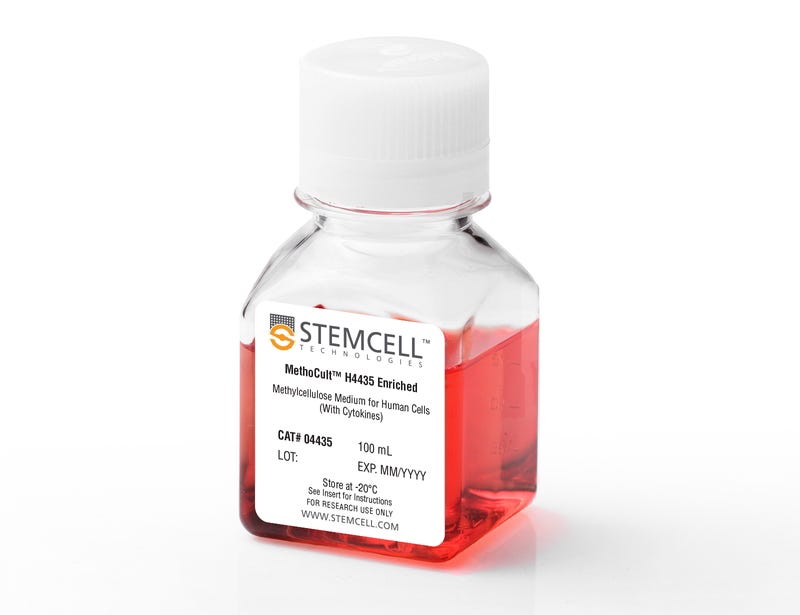
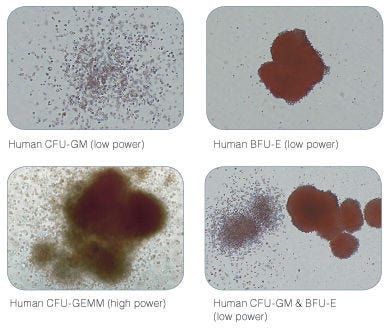
MethoCult™ H4435 Enriched (MethoCult™ GF+ H4435) is a complete methylcellulose-based medium for the growth and enumeration of hematopoietic progenitor cells in colony-forming unit (CFU) assays of human bone marrow, mobilized peripheral blood, peripheral blood, and cord blood samples. This medium supports optimal growth of erythroid progenitor cells (BFU-E and CFU-E), granulocyte-macrophage progenitor cells (CFU-GM, CFU-G and CFU-M), and multipotential granulocyte, erythroid, macrophage and megakaryocyte progenitor cells (CFU-GEMM). MethoCult™ H4435 Enriched is recommended for use with CD34+ cells and other purified cell populations, and for CFU assays performed as part of LTC-IC assays.
This product is designed for use in the following research area(s) as part
of the highlighted workflow stage(s). Explore these workflows to learn more about the other products we
offer to support each research area.
Semi-solid media (methylcellulose-based MethoCult™ and collagen-based MegaCult™-C) allow the clonal progeny of a single progenitor cell to remain spatially isolated from other colonies within a culture, so they may be separately identified and counted.
Why use methylcellulose-based media?
Methylcellulose permits better growth of erythroid colonies than other types of semi-solid support systems (eg. agar) while allowing optimal myeloid colony formation. When appropriate cytokines are present, committed progenitor cells of both erythroid and granulocyte/macrophage lineages (CFU-GM, CFU-G, CFU-M) as well as multi-potential progenitor cells (CFU-GEMM), can be assayed simultaneously in the same culture dish.
Is it necessary to add antibiotics to the media?
No, aseptic technique should be sufficient to maintain sterile cultures. However, antibiotics (eg. Penicillin/Streptomycin) or anti-fungals (eg. Amphotericin B) may be added to the methylcellulose medium if desired.
Is there anything I can do if my cultures appear contaminated?
No, once contamination is visible, it is not possible to rescue the cultures by the addition of antibiotics. Bacteria and yeast inhibit colony formation by depleting nutrients or by releasing toxic substances.
Why can't I use a pipette to dispense methylcellulose-based media?
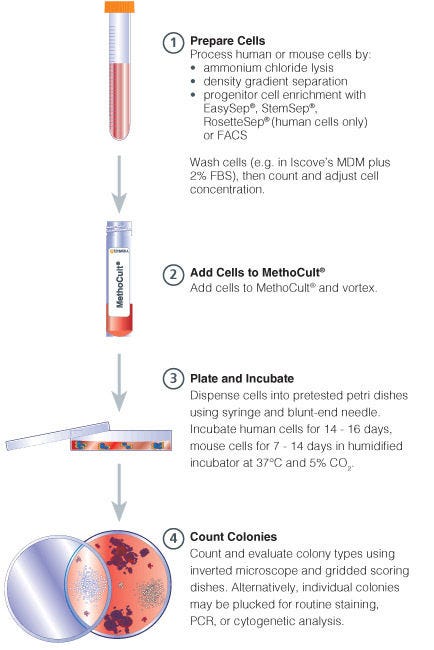
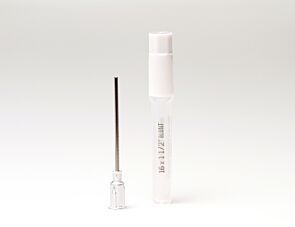
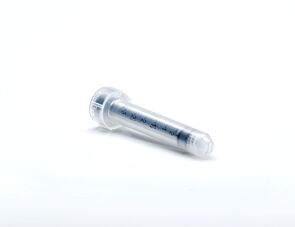
Methylcellulose is a viscous solution that cannot be accurately dispensed using a pipette due to adherence of the medium to the walls of the pipette tip. Blunt-End, 16 Gauge needles (Catalog #28110), in combination with 3 cc Syringes (Catalog #28230) are recommended for accurate dispensing of MethoCult™.
Can I 'pluck' the colonies for individual analysis?
Yes, colonies can be 'plucked' using a pipette with 200 µL sterile pipette tips or using a glass Pasteur pipette with an elongated tip. Individual colonies should be placed in a volume of 25 - 50 µL of medium, and diluted into suitable culture medium for further culture or analysis.
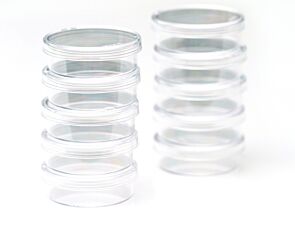
Why are low adherence dishes so important?
Adherent cells such as fibroblasts can cause inhibition of colony growth and obscure visualization of colonies.
Can MethoCult™ products be used for lymphoid progenitor CFU assays?
Human lymphoid progenitors (B, NK and T) seem to require stromal support for growth therefore cannot be grown in MethoCult™. Mouse pre-B clonogenic progenitors can be grown in MethoCult™ M3630 (Catalog #03630).
Is it possible to set up CFU assays in a 24-well plate?
Yes, as long as a plating concentration optimized for the smaller surface area of a well in a 24-well plate (1.9 cm2 as compared to ~9.5 cm2 for a 35 mm dish) is used for these assays. The number of replicate wells required to get an accurate estimation of CFU numbers may also need to be increased.
Can I stain colonies in MethoCult™ medium?
The cells in individual colonies in MethoCult™ can be stained, eg., for analysis of morphology or phenotype, after they are plucked from the dish and washed free of methylcellulose. Colonies grown in collagen-based MegaCult™-C medium can be used for immunohistochemical or enzymatic staining in situ after dehydration and fixation onto glass slides.
Are there differences in colony morphology with serum-free media?
Serum-containing media generally give better overall growth (colonies may appear larger) but there are no large differences in total colony numbers when CFU assays using serum-free media and serum-containing media are compared, provided that identical cytokines are present.
Can MethoCult™ be made with alternate base media?
Yes, this can be done as a 'custom' media order. Please contact techsupport@stemcell.com for more information.
Is there a MethoCult™ formulation suitable for HPP-CFC (high proliferative potential colony forming cell)?
Yes, MethoCult™ H4535 (Catalog #04535) can be used for the HPP-CFC assay as it does not contain EPO. The culture period is usually 28 days. It is not necessary to feed these cultures as growth factors in the medium are present in excess. As HPP-CFCs can be quite large, overplating can be a problem. It is recommended to plate cells at two or more different concentrations.
A Human Hematopoietic Niche Model Supporting Hematopoietic Stem and Progenitor Cells In Vitro.
M. V. J. Braham et al.
Advanced healthcare materials 2019 apr
Abstract
Niches in the bone marrow regulate hematopoietic stem and progenitor cell (HSPC) fate and behavior through cell-cell interactions and soluble factor secretion. The niche-HSPC crosstalk is a very complex process not completely elucidated yet. To aid further investigation of this crosstalk, a functional in vitro 3D model that closely represents the main supportive compartments of the bone marrow is developed. Different combinations of human stromal cells and hydrogels are tested for their potential to maintain CD34+ HSPCs. Cell viability, clonogenic hematopoietic potential, and surface marker expression are assessed over time. Optimal HSPC support is obtained in presence of adipogenic and osteogenic cells, together with progenitor derived endothelial cells. When cultured in a bioactive hydrogel, the supportive cells self-assemble into a hypoxic stromal network, stimulating CD34+ CD38+ cell formation, while maintaining the pool of CD34+ 38- HSPCs. HSPC clusters colocalize with the stromal networks, in close proximity to sinusoidal clusters of CD31+ endothelial cells. Importantly, the primary in vitro niche model supports HSPCs with no cytokine addition. Overall, the engineered primary 3D bone marrow environment provides an easy and reliable model to further investigate interactions between HSPCs and their endosteal and perivascular niches, in the context of normal hematopoiesis or blood-related diseases.
CRISPR/Cas9 genome editing in human hematopoietic stem cells.
R. O. Bak et al.
Nature protocols 2018 FEB
Abstract
Genome editing via homologous recombination (HR) (gene targeting) in human hematopoietic stem cells (HSCs) has the power to reveal gene-function relationships and potentially transform curative hematological gene and cell therapies. However, there are no comprehensive and reproducible protocols for targeting HSCs for HR. Herein, we provide a detailed protocol for the production, enrichment, and in vitro and in vivo analyses of HR-targeted HSCs by combining CRISPR/Cas9 technology with the use of rAAV6 and flow cytometry. Using this protocol, researchers can introduce single-nucleotide changes into the genome or longer gene cassettes with the precision of genome editing. Along with our troubleshooting and optimization guidelines, researchers can use this protocol to streamline HSC genome editing at any locus of interest. The in vitro HSC-targeting protocol and analyses can be completed in 3 weeks, and the long-term in vivo HSC engraftment analyses in immunodeficient mice can be achieved in 16 weeks. This protocol enables manipulation of genes for investigation of gene functions during hematopoiesis, as well as for the correction of genetic mutations in HSC transplantation-based therapies for diseases such as sickle cell disease, $\beta$-thalassemia, and primary immunodeficiencies.
Generation of induced pluripotent stem cells as a potential source of hematopoietic stem cells for transplant in PNH patients.
Phondeechareon T et al.
Annals of hematology 2016 OCT
Abstract
Paroxysmal nocturnal hemoglobinuria (PNH) is an acquired hemolytic anemia caused by lack of CD55 and CD59 on blood cell membrane leading to increased sensitivity of blood cells to complement. Hematopoietic stem cell transplantation (HSCT) is the only curative therapy for PNH, however, lack of HLA-matched donors and post-transplant complications are major concerns. Induced pluripotent stem cells (iPSCs) derived from patients are an attractive source for generating autologous HSCs to avoid adverse effects resulting from allogeneic HSCT. The disease involves only HSCs and their progeny; therefore, other tissues are not affected by the mutation and may be used to produce disease-free autologous HSCs. This study aimed to derive PNH patient-specific iPSCs from human dermal fibroblasts (HDFs), characterize and differentiate to hematopoietic cells using a feeder-free protocol. Analysis of CD55 and CD59 expression was performed before and after reprogramming, and hematopoietic differentiation. Patients' dermal fibroblasts expressed CD55 and CD59 at normal levels and the normal expression remained after reprogramming. The iPSCs derived from PNH patients had typical pluripotent properties and differentiation capacities with normal karyotype. After hematopoietic differentiation, the differentiated cells expressed early hematopoietic markers (CD34 and CD43) with normal CD59 expression. The iPSCs derived from HDFs of PNH patients have normal levels of CD55 and CD59 expression and hold promise as a potential source of HSCs for autologous transplantation to cure PNH patients.
For accurate dispensing of methylcellulose-based medium
Item added to your cart
MethoCult™ H4435 Enriched
Quality Statement:
PRODUCTS ARE FOR RESEARCH USE ONLY AND NOT INTENDED FOR HUMAN OR ANIMAL DIAGNOSTIC OR THERAPEUTIC USES UNLESS OTHERWISE STATED. FOR ADDITIONAL INFORMATION ON QUALITY AT STEMCELL, REFER TO WWW.STEMCELL.COM/COMPLIANCE.