EasySep™ Human CD15 Positive Selection Kit

Immunomagnetic positive selection of human CD15+ cells from whole blood
EasySep™ Human CD15 Positive Selection Kit

Immunomagnetic positive selection of human CD15+ cells from whole blood

From: 869 USD
Catalog #
(Select a product)
Immunomagnetic positive selection of human CD15+ cells from whole blood
Add to Wish List

Product Advantages


  • Fast and easy-to-use

  • Up to 99% purity

  • No columns required

What's Included

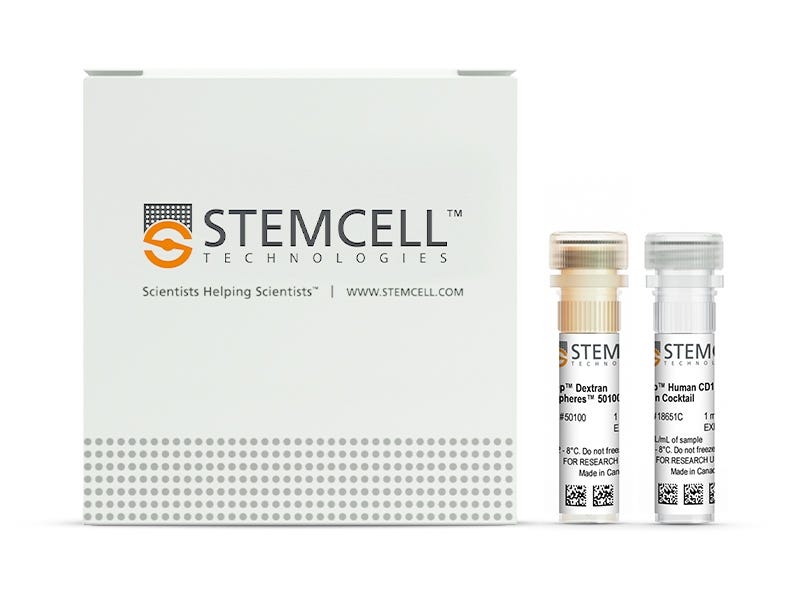
  • EasySep™ Human CD15 Positive Selection Kit (Catalog #18651)
    • EasySep™ Human CD15 Positive Selection Cocktail, 1 mL
    • EasySep™ Dextran RapidSpheres™, 1 mL
  • RoboSep™ Human CD15 Positive Selection Kit (Catalog #18651RF)
    • EasySep™ Human CD15 Positive Selection Cocktail, 1 mL
    • EasySep™ Dextran RapidSpheres™, 1 mL
    • RoboSep™ Buffer (Catalog #20104)
    • RoboSep™ Filter Tips (Catalog #20125)
Products for Your Protocol
To see all required products for your protocol, please consult the Protocols and Documentation.

Overview

Easily isolate highly purified human myeloid cells (CD15+) from ammonium chloride-lysed blood or other nucleated cell suspensions, using immunomagnetic positive selection, with the EasySep™ Human CD15 Positive Selection Kit. Widely used in published research for more than 20 years, EasySep™ combines the specificity of monoclonal antibodies with the simplicity of a column-free magnetic system.

In this EasySep™ positive selection procedure, desired cells are labeled with antibody complexes recognizing CD15 and magnetic particles. Labeled cells are separated using an EasySep™ magnet and by simply pouring or pipetting off the unwanted cells. The cells of interest remain in the tube. Following magnetic cell isolation, the desired CD15+ cells are ready for downstream applications such as flow cytometry, culture, or DNA/RNA extraction. The CD15 antigen is expressed on monocytes and granulocytes.

Learn more about how immunomagnetic EasySep™ technology works or how to fully automate immunomagnetic cell isolation with RoboSep™. Explore additional products optimized for your workflow, including culture media, supplements, antibodies, and more.
Magnet Compatibility
• EasySep™ Magnet (Catalog #18000)
• “The Big Easy” EasySep™ Magnet (Catalog #18001)
• EasyEights™ EasySep™ Magnet (Catalog #18103)
• RoboSep™-S (Catalog #21000)
Subtype
Cell Isolation Kits
Cell Type
Myeloid Cells
Species
Human
Sample Source
PMNC
Selection Method
Positive
Application
Cell Isolation
Brand
EasySep, RoboSep
Area of Interest
Chimerism, HLA, Immunology

Data Figures

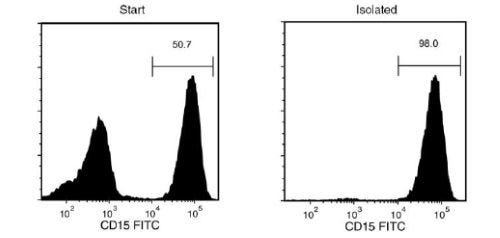
Figure 1. Typical EasySep™ Human CD15 Positive Selection Isolation Profile

Starting with lysed whole blood, the CD15+ cell content of the isolated fraction is typically 98.8 ± 0.8% (gated on CD45+ cells; mean ± SD). In the above example, the purities of the start and final isolated fractions are 50.7% and 98.0%, respectively.

Protocols and Documentation

Find supporting information and directions for use in the Product Information Sheet or explore additional protocols below.

Document Type
Product Name
Catalog #
Lot #
Language
Catalog #
18651RF
Lot #
All
Language
English
Catalog #
18651
Lot #
All
Language
English
Document Type
Safety Data Sheet 1
Catalog #
18651RF
Lot #
All
Language
English
Document Type
Safety Data Sheet 2
Catalog #
18651RF
Lot #
All
Language
English
Document Type
Safety Data Sheet 3
Catalog #
18651RF
Lot #
All
Language
English
Document Type
Safety Data Sheet 1
Catalog #
18651
Lot #
All
Language
English
Document Type
Safety Data Sheet 2
Catalog #
18651
Lot #
All
Language
English

Applications

This product is designed for use in the following research area(s) as part of the highlighted workflow stage(s). Explore these workflows to learn more about the other products we offer to support each research area.

Resources and Publications

Frequently Asked Questions

Can EasySep™ be used for either positive or negative selection?

Yes. The EasySep™ kits use either a negative selection approach by targeting and removing unwanted cells or a positive selection approach targeting desired cells. Depletion kits are also available for the removal of cells with a specific undesired marker (e.g. GlyA).

How does the separation work?

Magnetic particles are crosslinked to cells using Tetrameric Antibody Complexes (TAC). When placed in the EasySep™ Magnet, labeled cells migrate to the wall of the tube. The unlabeled cells are then poured off into a separate fraction.

Which columns do I use?

The EasySep™ procedure is column-free. That's right - no columns!

How can I analyze the purity of my enriched sample?

The Product Information Sheet provided with each EasySep™ kit contains detailed staining information.

Can EasySep™ separations be automated?

Yes. RoboSep™, the fully automated cell separator, automates all EasySep™ labeling and cell separation steps.

Can EasySep™ be used to isolate rare cells?

Yes. We recommend a cell concentration of 2x10⁸ cells/mL and a minimum working volume of 100 µL. Samples containing 2x10⁷ cells or fewer should be suspended in 100 µL of buffer.

Are the EasySep™ magnetic particles FACS-compatible?

Yes, the EasySep™ particles are flow cytometry-compatible, as they are very uniform in size and about 5000X smaller than other commercially available magnetic beads used with column-free systems.

Can the EasySep™ magnetic particles be removed after enrichment?

No, but due to the small size of these particles, they will not interfere with downstream applications.

Can I alter the separation time in the magnet?

Yes; however, this may impact the kit's performance. The provided EasySep™ protocols have already been optimized to balance purity, recovery and time spent on the isolation.

For positive selection, can I perform more than 3 separations to increase purity?

Yes, the purity of targeted cells will increase with additional rounds of separations; however, cell recovery will decrease.

How does the binding of the EasySep™ magnetic particle affect the cells? is the function of positively selected cells altered by the bound particles?

Hundreds of publications have used cells selected with EasySep™ positive selection kits for functional studies. Our in-house experiments also confirm that selected cells are not functionally altered by the EasySep™ magnetic particles.

If particle binding is a key concern, we offer two options for negative selection. The EasySep™ negative selection kits can isolate untouched cells with comparable purities, while RosetteSep™ can isolate untouched cells directly from whole blood without using particles or magnets.

Publications (12)

A systematic transcriptomic atlas and predictive framework for metabolite-driven T cell state transitions. Y. Xu et al. iScience 2026 Oct

Abstract

Gut microbial and endogenous metabolites are key regulators at the interface of host metabolism and immunity, yet their global effects on human T cell states remain poorly defined. Here, we profile primary human T cell responses to 364 endogenous and microbiota-derived metabolites using high-throughput digital RNA with perturbation of genes sequencing (DRUG-seq), revealing structured transcriptional trajectories spanning baseline, metabolically primed, and highly activated states. We develop DRUG-seq-PerturbFormer, a multi-task deep learning framework that quantitatively captures perturbation magnitude and directionality across these states. This analysis identifies a subset of metabolites that robustly reprogram T cell transcriptional programs. In a dextran sulfate sodium (DSS)-induced colitis model, representative candidates attenuated disease severity and were associated with suppression of inflammatory programs and partial restoration of immune homeostasis. Collectively, these findings show that metabolites act as signals shaping T cell function via transcription, nominating immunomodulatory targets for inflammatory diseases.
Identification of a PAK6-Mediated MDM2/p21 Axis That Modulates Survival and Cell Cycle Control of Drug-Resistant Stem/Progenitor Cells in Chronic Myeloid Leukemia A. Wu et al. International Journal of Molecular Sciences 2025 Jul

Abstract

Chronic myeloid leukemia (CML) is a leading example of a malignancy where a molecular targeted therapy revolutionized treatment but has rarely led to cures. Overcoming tyrosine kinase inhibitor (TKI) drug resistance remains a challenge in the treatment of CML. We have recently identified miR-185 as a predictive biomarker where reduced expression in CD34 + treatment-naïve CML cells was associated with TKI resistance. We have also identified PAK6 as a target gene of miR-185 that was upregulated in CD34 + TKI-nonresponder cells. However, its role in regulating TKI resistance remains largely unknown. In this study, we specifically targeted PAK6 in imatinib (IM)-resistant cells and CD34 + stem/progenitor cells from IM-nonresponders using a lentiviral-mediated PAK6 knockdown strategy. Interestingly, the genetic and pharmacological suppression of PAK6 significantly reduced proliferation and increased apoptosis in TKI-resistant cells. Cell survivability was further diminished when IM was combined with PAK6 knockdown. Importantly, PAK6 inhibition in TKI-resistant cells induced cell cycle arrest in the G2-M phase and cellular senescence, accompanied by increased levels of DNA damage-associated senescence markers. Mechanically, we identified a PAK6-mediated MDM2-p21 axis that regulates cell cycle arrest and senescence. Thus, PAK6 plays a critical role in determining alternative cell fates in leukemic cells, and targeting PAK6 may offer a therapeutic strategy to selectively eradicate TKI-resistant cells.
Modeling mesenchymal stromal cell support to hematopoiesis within a novel 3D artificial marrow organoid system Scientific Reports 2025 Jul

Abstract

The human bone marrow (BM) microenvironment involves hematopoietic and non-hematopoietic cell subsets organized in a complex architecture. Tremendous efforts have been made to model it in order to analyze normal or pathological hematopoiesis and its stromal counterpart. Herein, we report an original, fully-human in vitro 3D model of the BM microenvironment dedicated to study interactions taking place between mesenchymal stromal cells (MSC) and hematopoietic stem and progenitor cells (HSPC) during the hematopoietic differentiation. This fully-human Artificial Marrow Organoid (AMO) model is highly efficient to recapitulate MSC support to myeloid differentiation and NK cell development from the immature CD34 + HSPCs to the most terminally differentiated CD15 + polymorphonuclear neutrophils, CD64 + monocytes or NKG2A-KIR2D + CD57 + NK subset. Lastly, our model is suitable for evaluating anti-leukemic NK cell function in presence of therapeutic agents. Overall, the AMO is a versatile, low cost and simple model able to recapitulate normal hematopoiesis and allowing more physiological drug testing by taking into account both immune and non-immune BM microenvironment interactions.Supplementary InformationThe online version contains supplementary material available at 10.1038/s41598-025-07717-9.