NeuroCult™ NS-A Proliferation Kit (Human)

Medium for expansion of human neural stem and progenitor cells
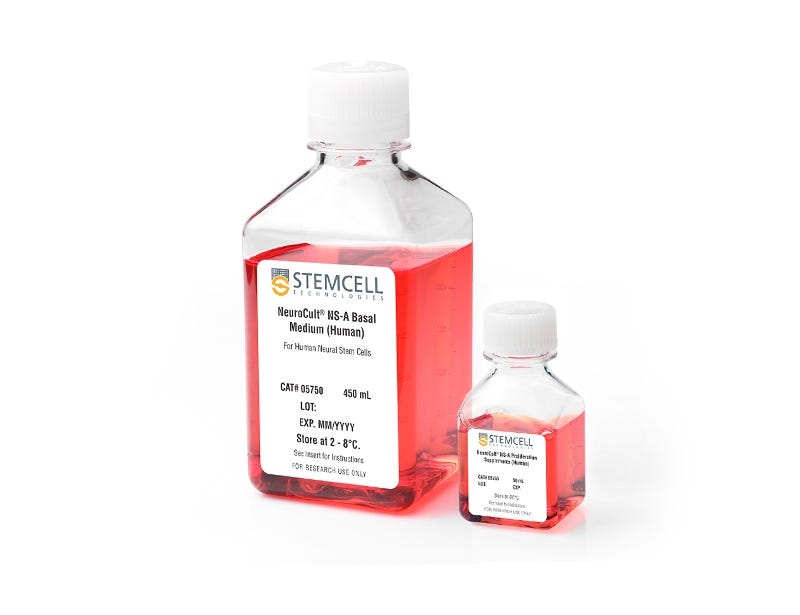
You may notice that your reagent packaging looks slightly different from images displayed here or from previous orders. We are temporarily using alternative bottles for this product. Rest assured that the products themselves and how you should use them have not changed.

NeuroCult™ NS-A Proliferation Kit (Human)

Medium for expansion of human neural stem and progenitor cells

From: 333 USD
Catalog #
(Select a product)
Medium for expansion of human neural stem and progenitor cells
Add to Wish List

What's Included

  • NeuroCult™ NS-A Basal Medium (Human), 450 mL (Catalog #05750)
  • NeuroCult™ Proliferation Supplement (Human), 50 mL (Catalog #05753)
Products for Your Protocol
To see all required products for your protocol, please consult the Protocols and Documentation.

Overview

NeuroCult™ NS-A Proliferation Kit (Human) is a standardized, serum-free basal medium and supplement for the culture of human neural stem and progenitor cells from normal tissues or tumor samples, in the neurosphere or adherent monolayer system. When supplemented with appropriate cytokines, NeuroCult™ NS-A Proliferation Kit (Human) is optimized to maintain human neural stem cells in culture for extended periods of time without the loss of their self-renewal, proliferation, or differentiation potential.

NOTE: Addition of rh EGF (Catalog #78006), rh bFGF (Catalog #78003) and heparin (Catalog #07980) is required.
Subtype
Specialized Media
Cell Type
Brain Tumor Stem Cells, Neural Stem and Progenitor Cells
Species
Human
Application
Cell Culture, Colony Assay, Expansion, Functional Assay, Spheroid Culture, Toxicity Assay
Brand
NeuroCult
Area of Interest
Cancer, Drug Discovery and Toxicity Testing, Neuroscience, Stem Cell Biology
Formulation Category
Serum-Free

Data Figures

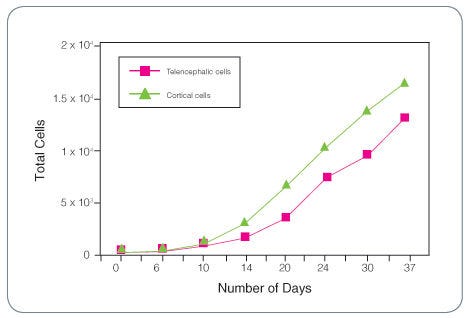
Total cell expansion for fetal human telencephalic and cortical cell neurospheres cultured with Complete NeuroCult™ Proliferation Medium (Human) containing rh EGF, rh bFGF and heparin

Figure 1. Total Cell Expansion for Fetal Human Telencephalic and Cortical Cells Cultured as Neurospheres with Complete NeuroCult™ Proliferation Medium (Human) Containing rh EGF, rh bFGF and Heparin

Protocols and Documentation

Find supporting information and directions for use in the Product Information Sheet or explore additional protocols below.

Document Type
Product Name
Catalog #
Lot #
Language
Catalog #
05751
Lot #
All
Language
English
Document Type
Technical Manual
Catalog #
05751
Lot #
All
Language
English
Document Type
Safety Data Sheet 1
Catalog #
05751
Lot #
All
Language
English
Document Type
Safety Data Sheet 2
Catalog #
05751
Lot #
All
Language
English

Applications

This product is designed for use in the following research area(s) as part of the highlighted workflow stage(s). Explore these workflows to learn more about the other products we offer to support each research area.

Resources and Publications

Publications (128)

A novel combinatorial therapeutic strategy using resveratrol and viral oncolysis for diffuse intrinsic pontine glioma: an in vitro study. K. Gourishetti et al. 3 Biotech 2026 Sep

Abstract

UNLABELLED: Pediatric central nervous system (CNS) tumors, specifically Diffuse Midline Gliomas (DMG) are a leading cause of cancer-related deaths in children presenting an unmet need for novel therapeutic development. In this study, we assessed the combined effects of resveratrol (RSV) and the oncolytic herpes simplex virus (oHSV), hrR3 in patient-derived diffuse intrinsic pontine glioma (DIPG) cell lines. RSV or hrR3 monotherapy resulted in a dose- and time-dependent reduction in cell viability. RSV pretreatment followed by hrR3 infection led to a significantly greater reduction in tumor cell viability than monotherapy. RSV pretreatment further enhanced the replication of hrR3, as evidenced by increased viral titers. Mechanistic analysis showed that the combination therapy was associated with reduced phosphorylation of the signal transducer and activator of transcription 3 (STAT3) and protein kinase B (AKT) signaling pathways, along with increased expression of apoptotic markers, including cleaved caspase-3 and Poly (ADP-ribose) polymerase (PARP). Together these findings indicate that RSV potentiates hrR3-mediated oncolysis in DIPG cells by enhancing viral replication, suppressing survival signaling and promoting apoptosis in DIPG cells in vitro. SUPPLEMENTARY INFORMATION: The online version contains supplementary material available at 10.1007/s13205-026-05029-x.
Nanopatterned bioresorbable elastomeric scaffolds to promote neural, glial, and endothelial differentiation using human embryonic and induced pluripotent stem cells I. Romayor et al. Journal of Tissue Engineering 2026 Feb

Abstract

Bioresorbable nanopatterned scaffolds functionalized with polydopamine (PDA) and graphene oxide (GO) have been shown to promote the differentiation of murine neural stem cells (mNSCs) toward neural and glial lineages. Herein, we aim to evaluate the compatibility of these scaffolds for the culture and differentiation of both human embryonic (hESCs) and induced pluripotent (hiPSCs) stem cells. Our results indicate that PDA and GO scaffolds support the topographic alignment of hESCs and hiPSCs cultures, while preserving their pluripotency characteristics. Upon differentiation, PDA and GO scaffolds guide cell specification toward the neuroectoderm germ layer and the neural crest. This promotes enhanced differentiation into both neural and supportive glial cells of the central nervous system (CNS), as well as Schwann cells of the peripheral nervous system (PNS). Moreover, nanopatterned scaffolds also support the differentiation of hESCs and hiPSCs toward endothelial precursors. These findings establish a novel culture platform that enables combined differentiation pathways, potentially relevant for applications in personalized medicine and regenerative cell therapy.
GLUD1 Inhibition Disrupts Glutamate Homeostasis and Induces Metabolic and Redox Stress in Gliomas. M. Trybula et al. Cells 2026 Aug

Abstract

Glutamate dehydrogenase (GLUD1) links glutamine metabolism and redox regulation, yet its prognostic and functional relevance across different glioma subtypes warrants further study. Here, we show that GLUD1 expression was inversely associated with tumor grade and positively associated with survival across glioma subtypes, a relationship not fully recapitulated by broader glutaminolysis-related gene signatures. To investigate the consequences of GLUD1 inhibition, we treated endogenous IDH-mutant and IDH-wildtype glioma cell lines with the reported GLUD1 inhibitor R162. GLUD1 inhibition reduced viability in all cell lines tested. This effect was not rescued by α-ketoglutarate (α-KG) supplementation, indicating that impaired tricarboxylic acid (TCA) cycle anaplerosis was not the primary mechanism underlying GLUD1 dependency. Instead, GLUD1 inhibition caused intracellular glutamate accumulation, increased reactive oxygen species (ROS), γ-H2AX induction, and elevated intracellular calcium, while complementary in silico analyses predicted disruption of mitochondrial membrane potential following R162 exposure. Together, these findings indicate that GLUD1 inhibition induces metabolic and redox stress associated with disrupted glutamate and calcium homeostasis and DNA damage. Our findings distinguish the favorable prognostic value of GLUD1 expression from the cellular vulnerability revealed by its inhibition, supporting further investigations of GLUD1 as both a prognostic biomarker and potential therapeutic target in glioma.
You may notice that your reagent packaging looks slightly different from images displayed here or from previous orders. We are temporarily using alternative bottles for this product. Rest assured that the products themselves and how you should use them have not changed.